Not bolted on after, painted institutional grey, with a hydraulic lift that breaks every other season. Built into the wagon from the rear gate forward — the same white oak as the rest of the bed.
By William “Kelly” Hicks · Founder & Master Wagon Maker··9 min read
Hero photograph: B.D.'s world (Flickr). CC BY-SA 2.0
The grey-lift problem
The wheelchair user gets announced, every single time.
If you've been to the Houston Livestock Show and Rodeo, or any large fair with wagon rides, you've seen the pattern. The regular wagon is wood and iron and leather. It looks like what it is. Beside it, or behind it, sits the “accessible” option: a single squat platform painted institutional grey, with a hydraulic lift on the back that hums and shudders and sometimes fails halfway up. A staff member in a safety vest works the controls. Everybody waits.
The wagon is announced as one thing. The lift is announced as another. And every wheelchair user who rides on that lift gets announced too — not by name, but by infrastructure. They are loaded. They are processed. They are visibly separate from the line of family members who just stepped up onto the wood bed and sat down on a bench.
That is not an accessibility problem in the technical sense. The ADA box gets checked. A wheelchair gets onto the wagon. But it is a dignity problem. And dignity is not a side dish to accessibility — it is the whole point.
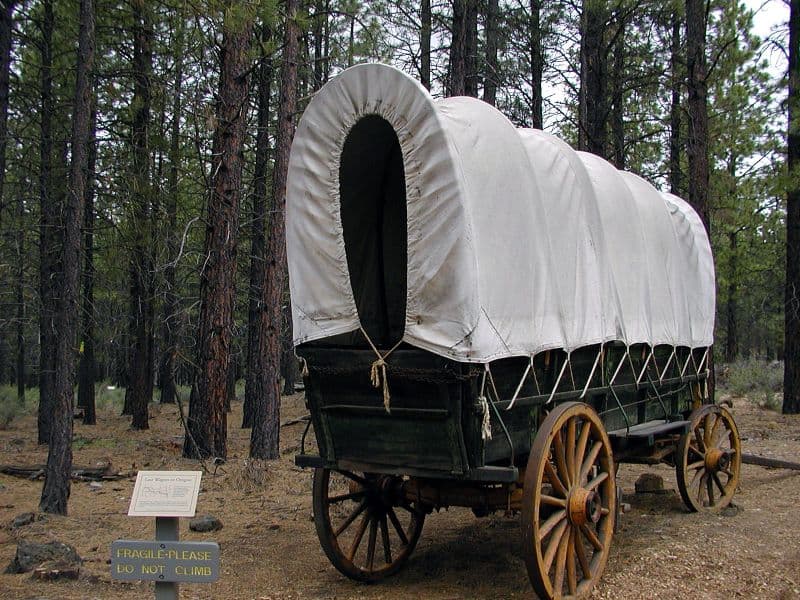
A heritage wagon reads as one object: wood, iron, leather. The grey hydraulic lift bolted onto the back of the “accessible” version reads as a second object — and that second reading is exactly the problem.Cullen328 (Wikimedia Commons) · CC BY-SA 4.0
The grey-lift problem, in engineering detail
The hydraulic lift fails because it was always going to fail.
Step past the dignity argument for a minute and look at the hydraulic lift the way a wheelwright looks at a wheel. It is a machine. Machines have failure modes. The failure modes of a rear-mount hydraulic wheelchair lift, in roughly the order they will bite you, are these.
The seals fail in dust.A rodeo midway, a county fairground, a ranch road in July — these are dust environments. Hydraulic cylinders depend on a wiper seal and a rod seal staying clean. Grit on the rod gets dragged past the seal on every stroke. A lift used three weekends a month in Texas dust will not see its manufacturer's seal-life projection. It will see roughly half of it.
The fluid leaks in heat. Hydraulic fluid viscosity drops as temperature rises. A lift sitting in 105°F sun before its first cycle of the day is running its pump against thinner fluid through wider seal clearances. Small weeps become drips. Drips on a wood wagon bed become stains you cannot sand out, and on a paved boarding pad they become a slip hazard the staff has to cone off.
It adds two to four hundred pounds of dead weight to the back of the vehicle. A typical rear-mount platform lift assembly — platform, mast, hydraulic cylinder, pump, frame — runs between 250 and 400 pounds. Bolted to the back of a wagon, that mass sits behind the rear axle, which is the worst place to put it. The horses feel it. The kingpin feels it. The rear axle bearings feel it on every mile of trail.
Deployment takes thirty to sixty seconds. Power on. Platform unfold. Lower to ground. Wait. Roll on. Secure. Raise. Wait. Transfer onto the wagon bed. Stow the platform. Power off. A rear-gate ramp built from the same white oak as the bed deploys in ten seconds, two-handed, no power source. Across an eight-hour event with thirty boardings, the lift burns roughly twenty-five minutes of operator labor that the ramp does not.
The lift surface is small. A typical platform runs around 30 inches by 36 inches. The footprint of a power chair with a rider, anti-tip wheels, and a control joystick can exceed that. The rider has to align the chair to a marked rectangle while a stranger watches. A rear-gate ramp built into a wagon four to five feet wide gives the rider room to enter at any approach angle and correct on the way up.
The lift announces itself.This is not a soft failure mode — it is the loudest one. The lift is a separate object in a different color making a different sound, visible to everyone in the boarding line. It cannot be hidden. A rear-gate ramp, hinged at the wagon floor and milled from the same oak as the bed, is invisible as a piece of accessibility infrastructure. It looks like a tail gate, because it is one.
None of this is a knock on the engineers who designed rear-mount lifts. They solved a real retrofit problem for a vehicle that had already been built. The mistake is treating that retrofit as the right answer for a vehicle we have not yet built. We have a blank sheet of drafting paper. The hydraulic lift is not on it.
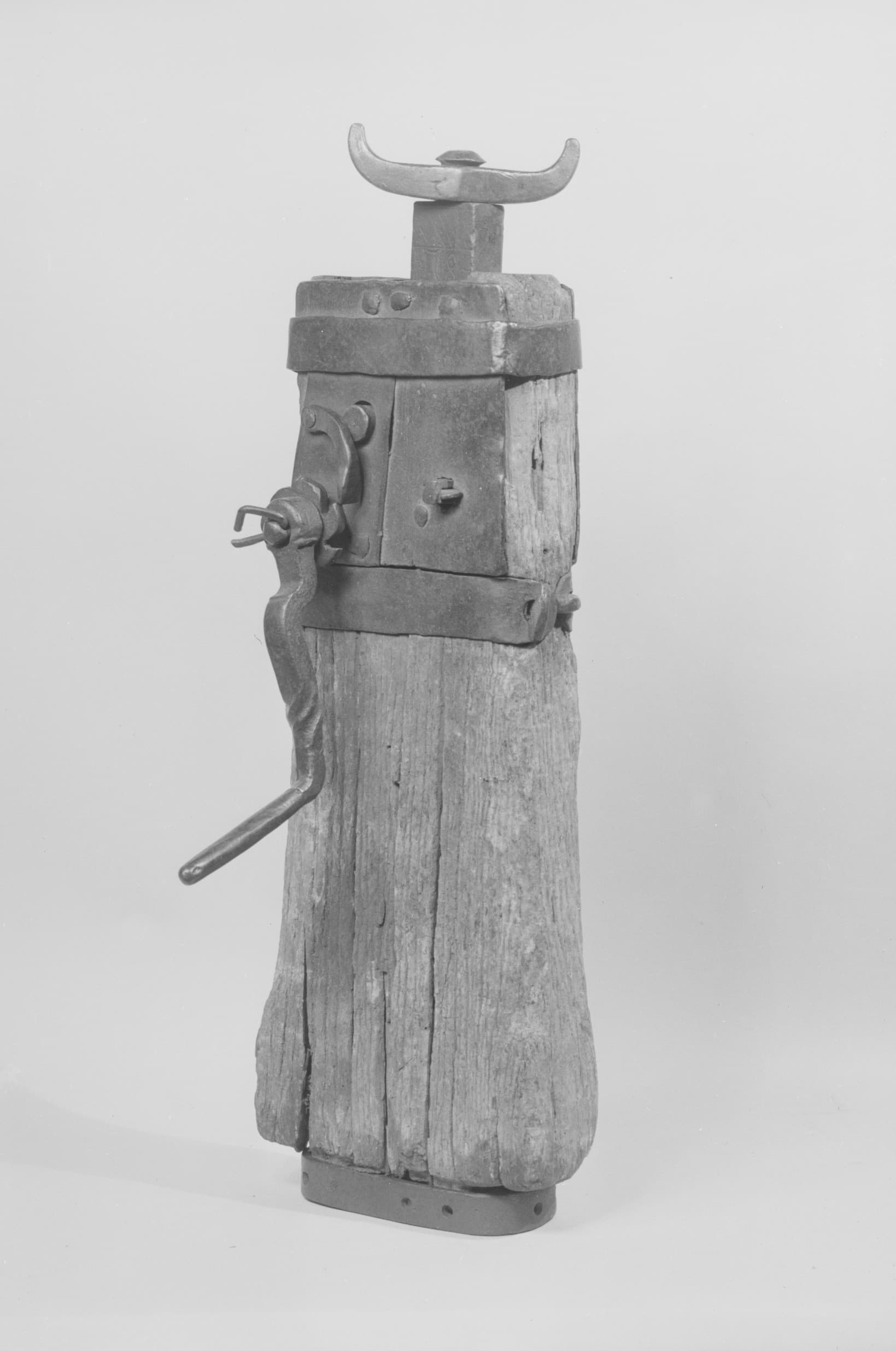
A wagon jack from the original Conestoga era. Two moving parts, a hardwood beam, a forged iron pawl. It still works two centuries later because there was almost nothing in it to break. The rear-gate ramp follows the same logic.Metropolitan Museum of Art (CC0) · CC0
✦The design we’re prototyping✦
The ramp is the gate. The tie-downs are the floor.
Here is what we are drawing, sawing, and bending steam through right now in Midway — the prototype Healin' Wheels accessible heritage wagon.
One
The rear gate is the ramp.
Same white oak as the wagon bed. Same finish. Same hardware forged on the same anvil. When it's closed, it's a tail gate. When it's down, it's a ramp at a gentle angle that any standard manual or power chair can roll up without help. Nothing about it reads as a medical add-on, because nothing about it is a medical add-on. It is a piece of the wagon, designed at the same drafting table, on the same day.
Two
Two wheelchair tie-downs in the floor frame.
The hardpoints are part of the framing — mortised in and bolted through the chassis, not screwed to the deck after the fact. The straps that clip into them are stored under the bench seat when not in use. You do not see them until you need them. When you need them, they hold to FMVSS standards and the wheelchair rides as steady as anyone else on the wagon.
Three
Low-step entry on both sides.
Not everyone rolls. Plenty of riders use a cane, a walker, a prosthetic, or just a bad knee. A low-step entry on either side, with grab handles at the right reach for a seated person and a standing person both, means an eighty-year-old with a hip replacement boards the same way an eight-year-old does. No fuss. No waiting.
Four
Grab handles where hands actually go.
We're mocking up reach studies before we forge. The handles get placed where a transferring rider, a balancing rider, and a child standing on the bed all want them — not where a CAD template puts them. Hand-forged iron, leather wrap, set into the white oak so they read as part of the wagon.
The build, part by part
How the wagon actually solves the problem in wood.
These are the engineering decisions inside the four principles above. None of this is built yet — we are in Midway, Texas, drawing the first one. But the dimensions and the hardware are not aspirational. They are what the wagon will be.
The rear gate as ramp.The gate is hinged at the floor of the wagon bed, not at the top. Hinges are hand-forged iron with a 5/8-inch pin and a brass thrust washer so the gate opens smoothly under load. When the gate is down, the inside face of the gate becomes the ramp surface, milled white oak with shallow transverse grooves for traction in the rain. A pair of forged eye-bolts at the gate's outer corners take a chain or webbing strap on each side, set to hold the gate at a ramp angle below 1:8 — the ADA-compliant slope for a wheelchair ramp without handrails. With a wagon bed sitting roughly 24 inches off the ground, that puts the ramp run at about 16 feet. Two riders deploy it in ten seconds. One person can do it if the chain hooks are pre-rigged.
The tie-downs in the floor frame.Two wheelchair securement positions sit forward of the rear axle, one along each side of the bed. Each position uses four recessed steel anchors set through-bolted into the chassis frame, not just the bed planks — the load path goes into the same hardwood that takes the brake lever, not into a plank that could split. The anchors meet the four-point securement standard used in transit (WC18 / WC19 family anchorages), so the chair is held by four straps with quick-release cam buckles: two forward, two rear, plus a separate lap-and-shoulder occupant restraint that anchors to the wagon bed, not to the chair. When no wheelchair is aboard, the anchors sit flush under hinged oak covers and read as ordinary floor detail.
The side-step entries.Both sides of the wagon have a removable step at the boarding point — a white-oak block on iron pins, slotted into mortises in the side rail. The step adds an intermediate 9-inch rise between ground and bed, which is the height an octogenarian with a hip replacement, a kid in cowboy boots, and a rider with a cane all want. The step pulls out and stows under the bench when the wagon is loading wheelchairs and the rear-gate ramp is the entry path instead.
The bench leather and grab handles.The bench cushions are bridle-leather over a horsehair core, sewn with linen thread the way harness saddles are sewn. Hand-forged iron grab handles, leather-wrapped, sit every 18 inches along the inside of the bench back. Eighteen inches is close to the average forearm length of an adult — close enough that a rider in any seat can always reach one without stretching. A continuous leather strap along the upper rail, anchored at every handle, gives a rider transferring from a wheelchair to the bench a hand-line to work along, the way a grab bar in a bathroom works.
The interior width.The bed runs 54 inches clear between the side rails. A standard manual wheelchair is 25 to 27 inches wide. A power chair runs 24 to 28 inches. Fifty-four inches of clear width means the wheelchair user rides with at least 24 inches of bench seat alongside them — not behind them, not in a separate row. Their companion sits at their elbow. That single dimension is the difference between “the wheelchair has a spot” and “the wheelchair user is sitting with their people.” It is also the difference between a wagon that meets the ADA and a wagon that meets the design ceiling.
Seat height. The bench sits at 18 inches off the bed, which is the recommended transfer height to and from a standard manual wheelchair seat (typically 19 to 20 inches off the floor). The half-inch differential favors the transfer onto the bench, which is the harder direction. A seated rider transferring back to the chair drops the small differential rather than climbing it.
Every one of these decisions can be made in pencil on the first draft of the drawing. None of them costs more in material than the wagon was already going to cost. None of them requires a separate trade, a separate inspection, or a separate budget line. They are the wagon.
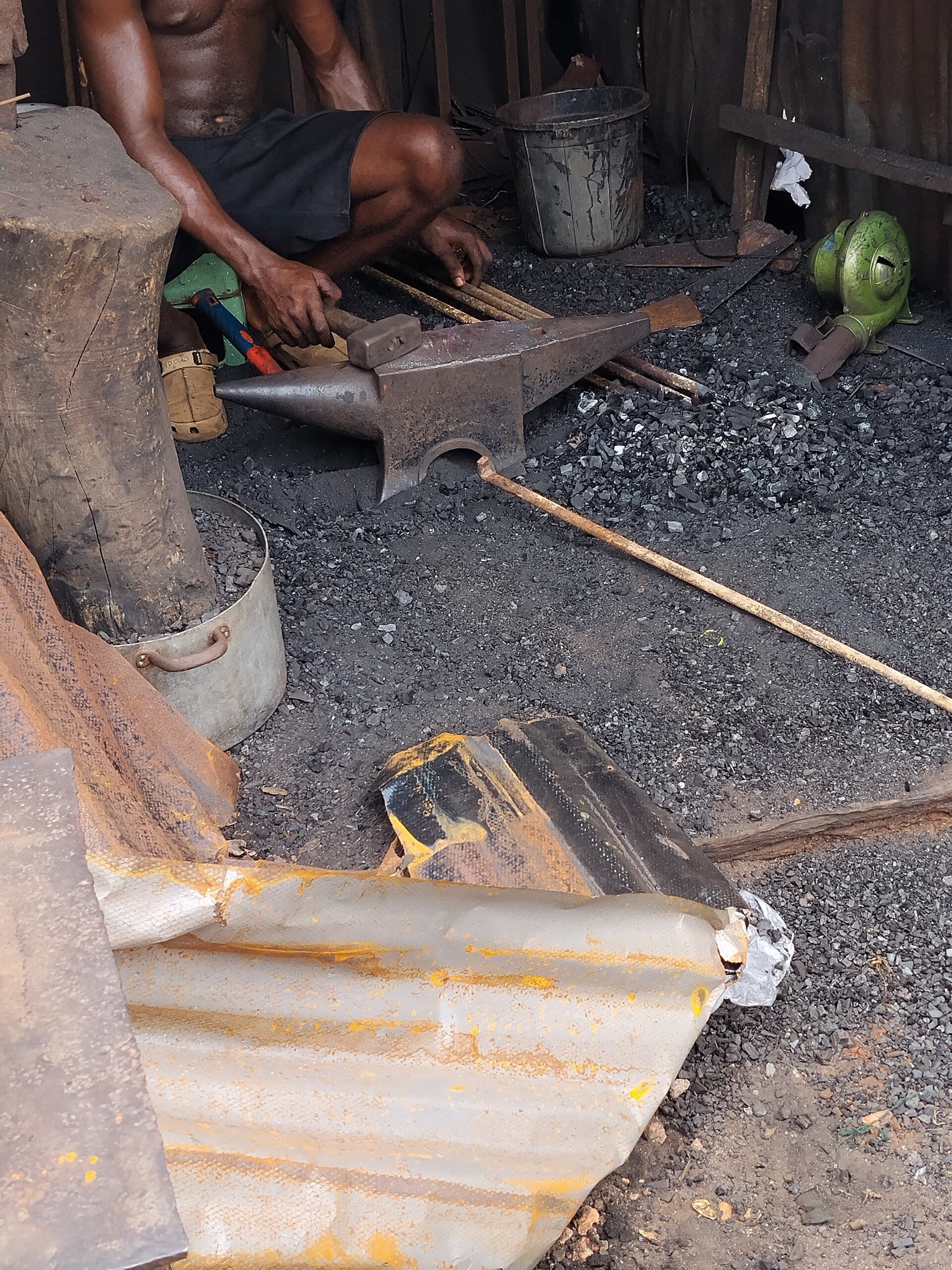
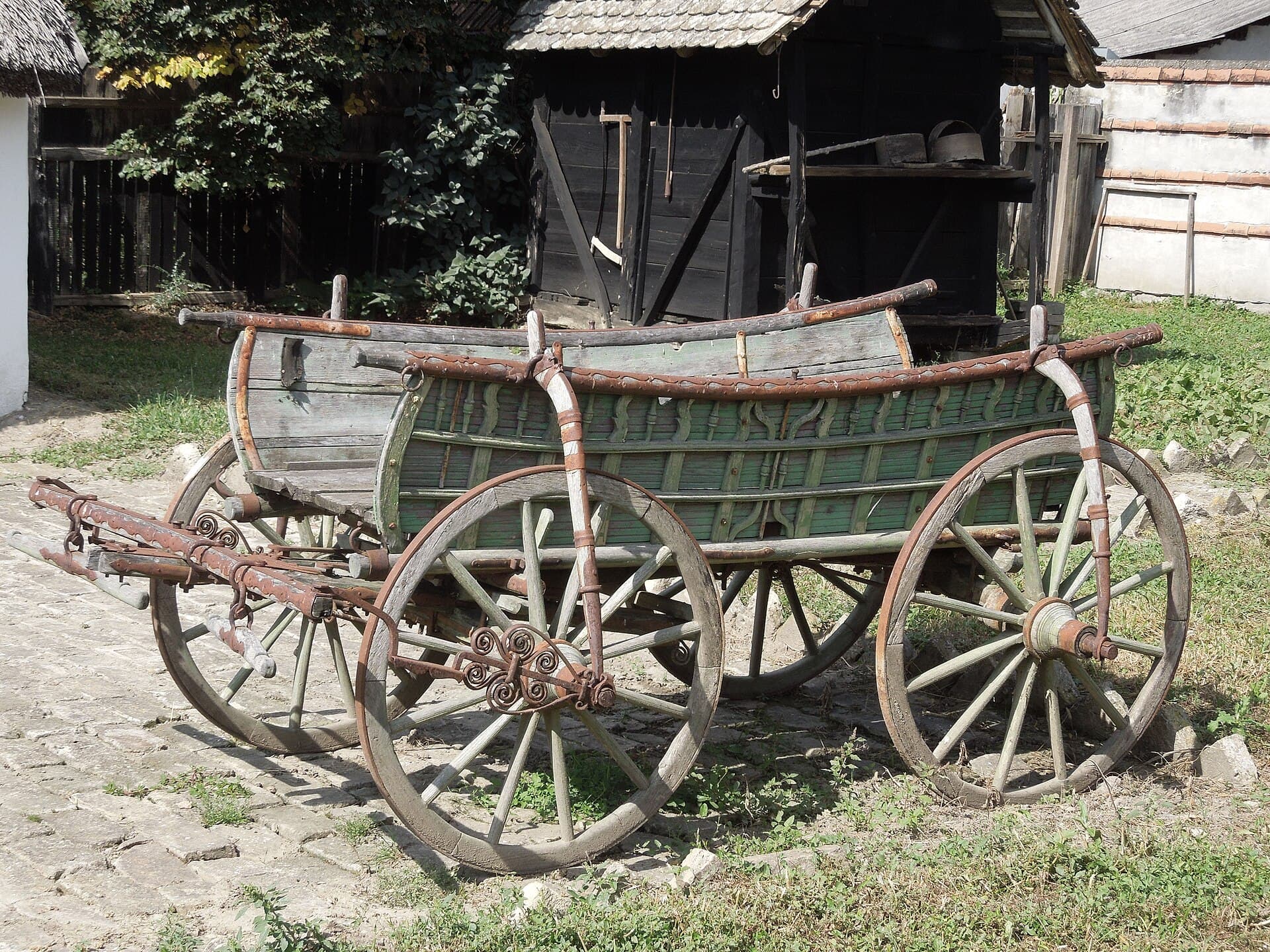
The same forge that makes the brake lever makes the hinge pin, the tie-down anchor, and the grab handle. There is no separate accessibility shop because there is no separate accessibility part.Johnnybam (Wikimedia Commons) · CC BY-SA 4.0
One wagon, one ride, one family. The rear-gate ramp and the floor-frame tie-downs mean a wheelchair user boards the same wagon, at the same time, as everyone they came with.M Todorovic (Wikimedia Commons) · CC BY-SA 4.0
Why this matters
Wheelchair users want to ride with their family.
The most common thing we hear from disabled Texans — veterans, kids, grandparents, working adults — is some version of the same sentence. I want to ride with my people. Not separately. Not on the special wagon behind the regular wagon. Not after the line moves. With the people I came with, at the same time, on the same vehicle.
When the wheelchair user rolls up the rear-gate ramp and locks into the floor-frame tie-downs, and the grandmother with the walker takes the low-step entry on the left side, and the nine-year-old climbs in over the wheel hub the way kids have done since 1860 — that's a wagon ride. That's one event, with one wagon, that one family rode together. The grey lift never produces that. It can't. Its whole geometry assumes the wheelchair is the exception.
Disability is not the exception. About one in four American adults lives with a disability of some kind, per the CDC. Add everyone who's temporarily on crutches, everyone pregnant, everyone with a stroller, everyone too old for the hub-step, and the “regular wagon” in most rodeos turns out to be the wagon designed for the narrowest slice of the actual crowd.
The man behind the idea
Ron Mace and the founding of universal design.
Ronald L. Mace contracted polio at age nine, in 1950, before the Salk vaccine. He came out of the hospital a wheelchair user, and stayed one for the rest of his life. He enrolled at the North Carolina State University School of Design in the early 1960s, when the campus was not accessible by any modern definition of the word. Friends carried him up the steps to architecture studio. He earned his bachelor of architecture in 1966 and went into practice in Raleigh.
Mace spent the next two decades watching the field he had joined treat accessibility as a separate question from design. The mainstream practice produced buildings with stairs, and then a separate ramp added on the side. Bathrooms on the floor plan, and then a separate accessible stall hidden down a back corridor. Entrances at the front, and then a separate service door for the wheelchair user. The language of the field was “barrier-free design” or “accessible design” — phrases that, by their own grammar, implied a default and an exception. The default was the building. The exception was the disabled person.
Mace argued that the framing itself was wrong. If a building needed to be made accessible after the fact, the building had been drawn wrong on day one. He proposed designing for the full range of human bodies from the start — not as a kindness to disabled users, but as a feature of competent architecture. He needed a name for that idea that didn't carry the barrier-free / accessible / special-needs baggage. In the mid-1980s, he started using the phrase universal design.
In 1989 Mace founded the Center for Universal Design at NC State. It was the first research institution in the country built around the premise. In 1997, working with a small interdisciplinary team of architects, product designers, and engineers — Bettye Rose Connell, Mike Jones, Jim Mueller, Abir Mullick, Elaine Ostroff, Jon Sanford, Ed Steinfeld, Molly Story, and Gregg Vanderheiden — the center published the seven principles of universal design. They are not legal standards. They are not building codes. They are a checklist for the drafting table.
Mace died in 1998, the year after the principles were published. He gave a closing keynote in June of that year at the international conference “Designing for the 21st Century” in Hofstra, New York, and died days later. He was 58. The Center for Universal Design continued his work; his language continued spreading. Today “universal design” appears in the design vocabulary of architecture schools on six continents, and the seven principles still read the way they read in 1997 because the problem they describe has not changed.
We are wagon-makers in Texas, not architects in Raleigh. But Mace's argument applies to wagons exactly the way it applied to buildings. A wagon that needs a hydraulic lift bolted to its rear gate is a wagon that was drawn wrong on day one. The right answer is not a better lift. The right answer is a better drawing.
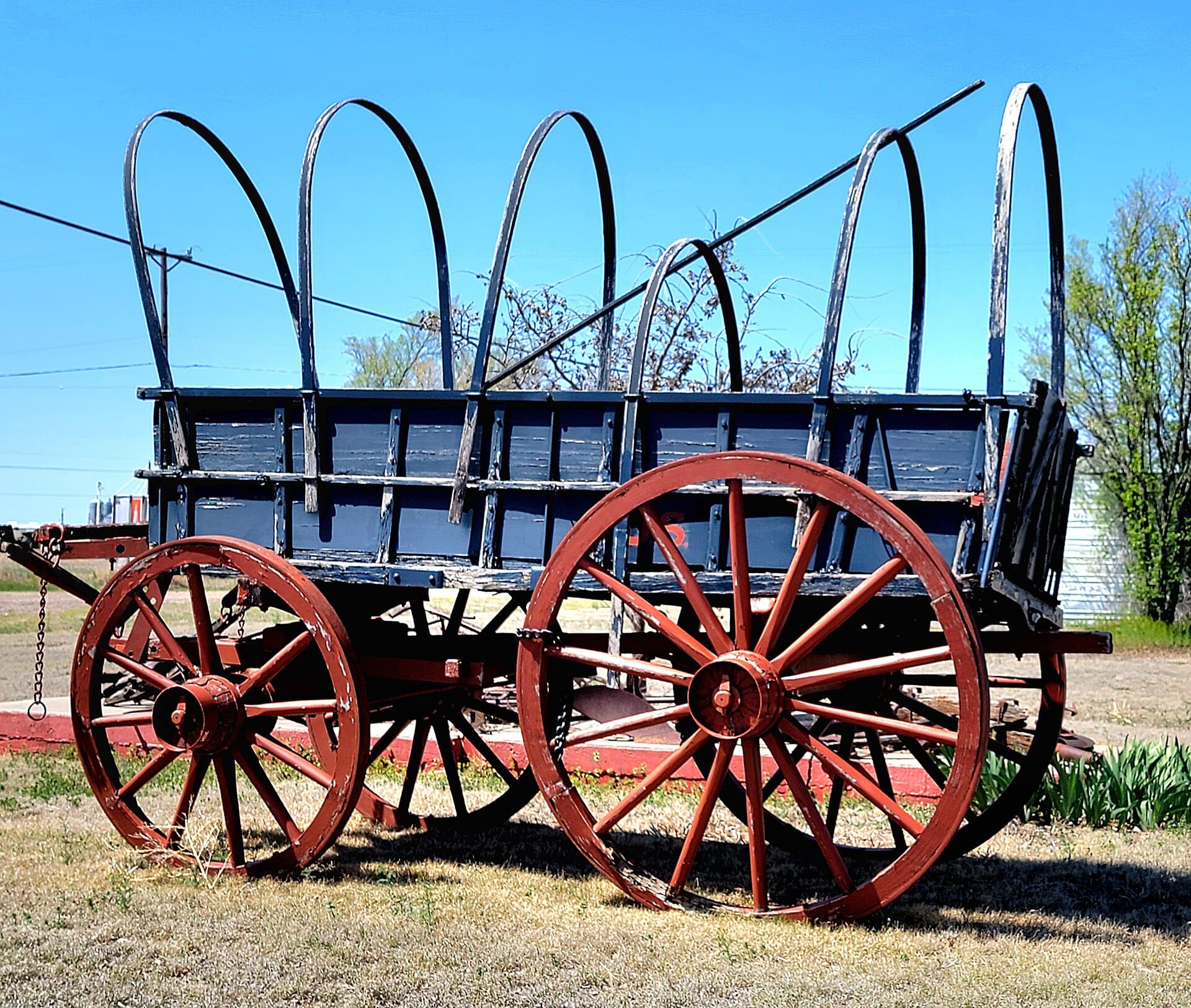
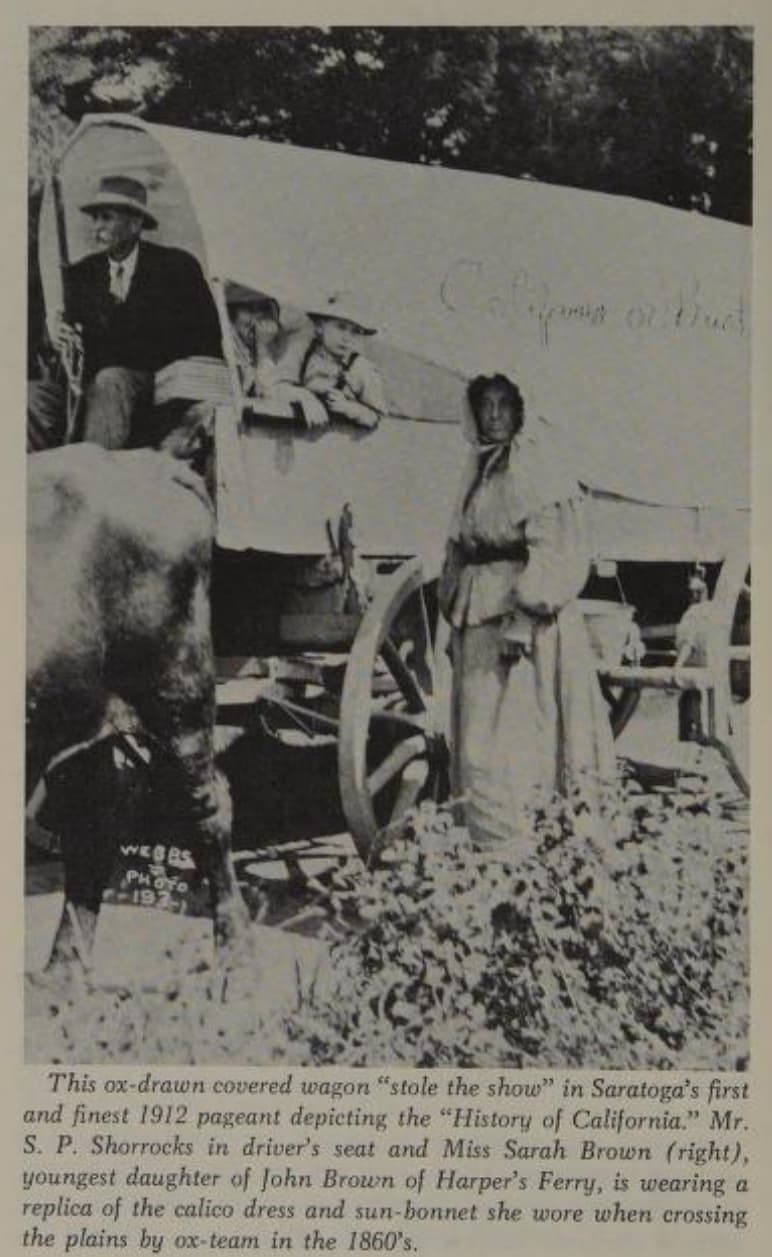
A replica prairie schooner photographed with its driver — what the working wagons of the 19th century looked like at human scale. Their form was settled long before anyone asked whose bodies they fit.Unknown / Public domain (Wikimedia Commons) · Public domain
The movement we’re drawing from
A short history of universal design.
The phrase “universal design” was coined by Ronald Mace, an architect and polio survivor, at North Carolina State University in the 1980s. Mace had spent a career watching buildings get retrofitted — ramps tacked onto entrances that already had stairs, elevators bolted onto stairwells, accessible bathrooms hidden down hallways no one used. He proposed something simpler: design the thing right the first time, for the widest possible range of bodies, and you won't need the retrofit.
Seven principles
What universal design actually says.
The seven principles that came out of Mace's Center for Universal Design read like common sense once you've heard them. Equitable use. Flexibility in use. Simple and intuitive. Perceptible information. Tolerance for error. Low physical effort. Size and space for approach and use. They don't mention wheelchairs once. They don't need to. If the design works across the human range, the wheelchair user is already included, and so is the person carrying a baby, and so is the person with arthritis, and so is the person who just twisted an ankle.
The Americans with Disabilities Act is the legal floor. Universal design is the design ceiling. The ADA tells you what you have to do so you don't get sued. Universal design tells you what to build so nobody has to ask.
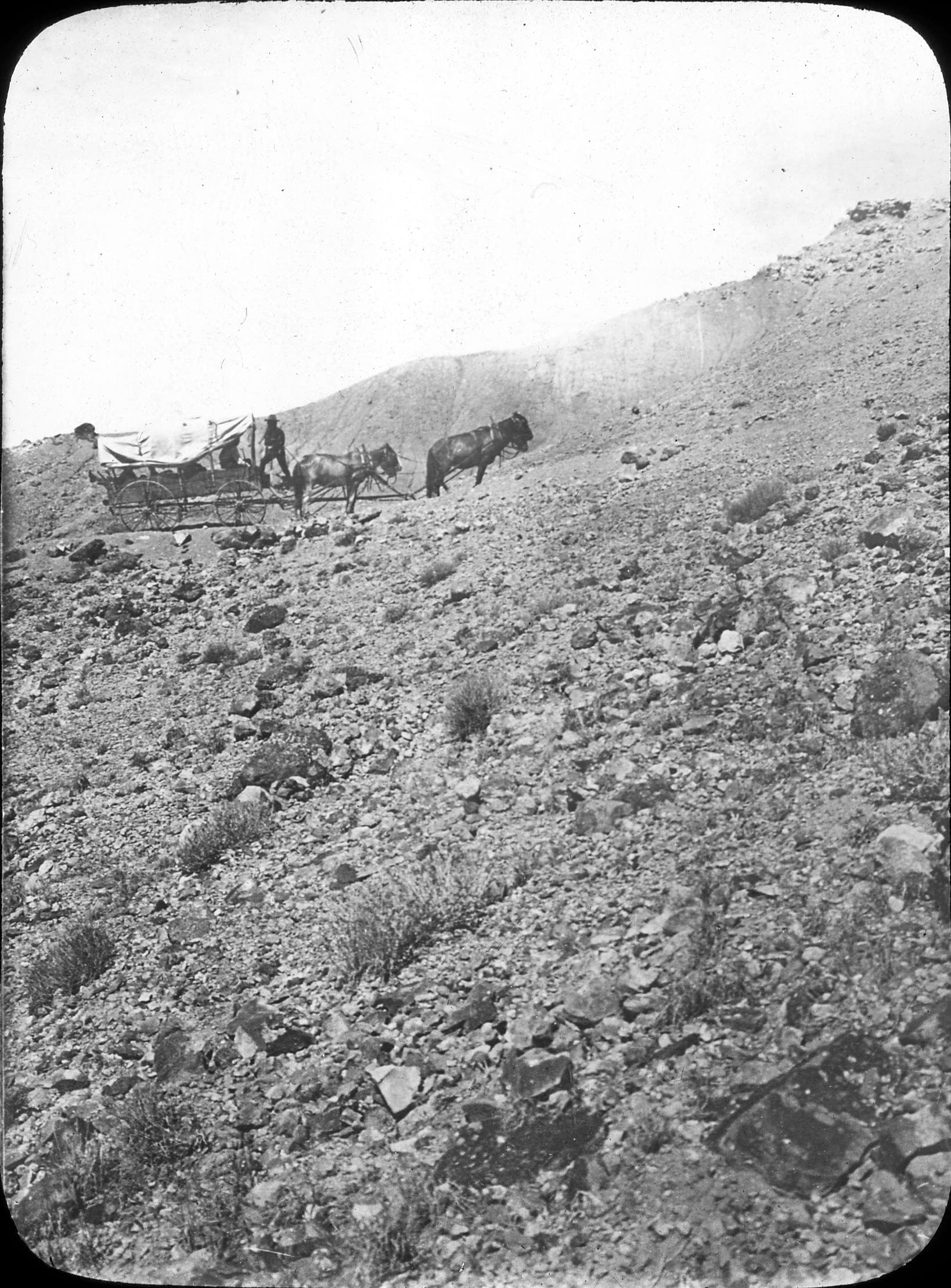
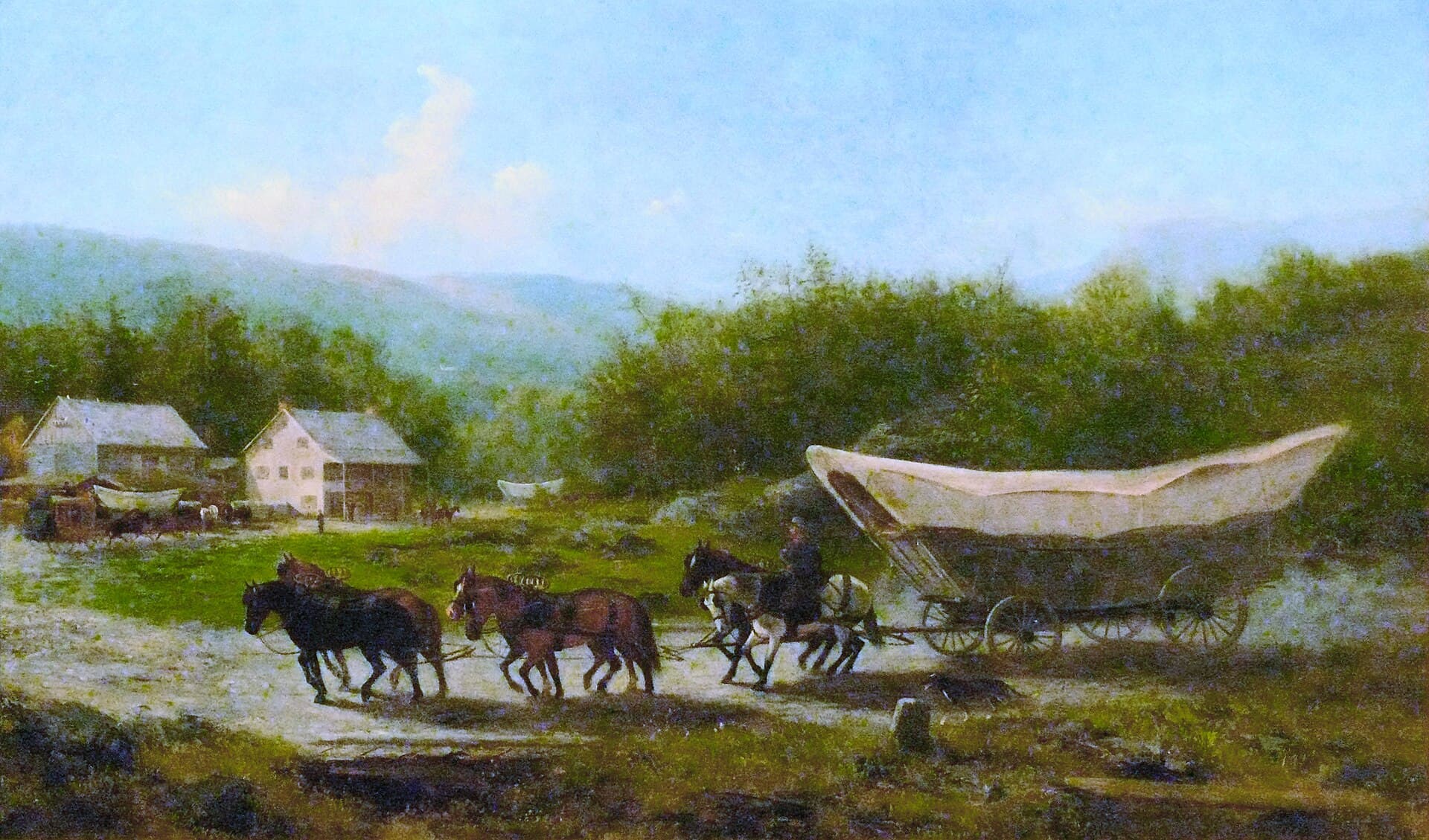
A prairie schooner from the era universal design was answering: a vehicle whose form was settled long before anyone thought to ask whose bodies it fit. The Healin' Wheels prototype starts the drawing over.OSU Special Collections & Archives, Commons · No known copyright restrictions
The economics
Building accessible costs less than retrofitting accessible.
There is a persistent myth that an accessible build is a more expensive build. It's the inverse, and anyone who's ever priced a hydraulic-lift retrofit knows it. The lift itself is a five-figure piece of equipment. It requires a hydraulic pump, a power source, certified install, an annual inspection, and somebody trained to operate it. Across a wagon's working life, the lift will be the single most expensive component on the vehicle, and the most likely to fail.
Our prototype rear-gate ramp is the same white oak we're already buying for the bed. The hinges are forged on the same anvil we're already firing. The tie-down hardpoints are machined and set during framing — not added afterward. The marginal cost of designing the wagon accessible, when you start from a blank sheet of drafting paper, is small. The cost of bolting accessibility onto a wagon you've already built is large, ugly, and ongoing.
Universal design pays for itself twice. Once at build time, because you only build once. Once at use time, because nothing breaks the way a hydraulic lift breaks.
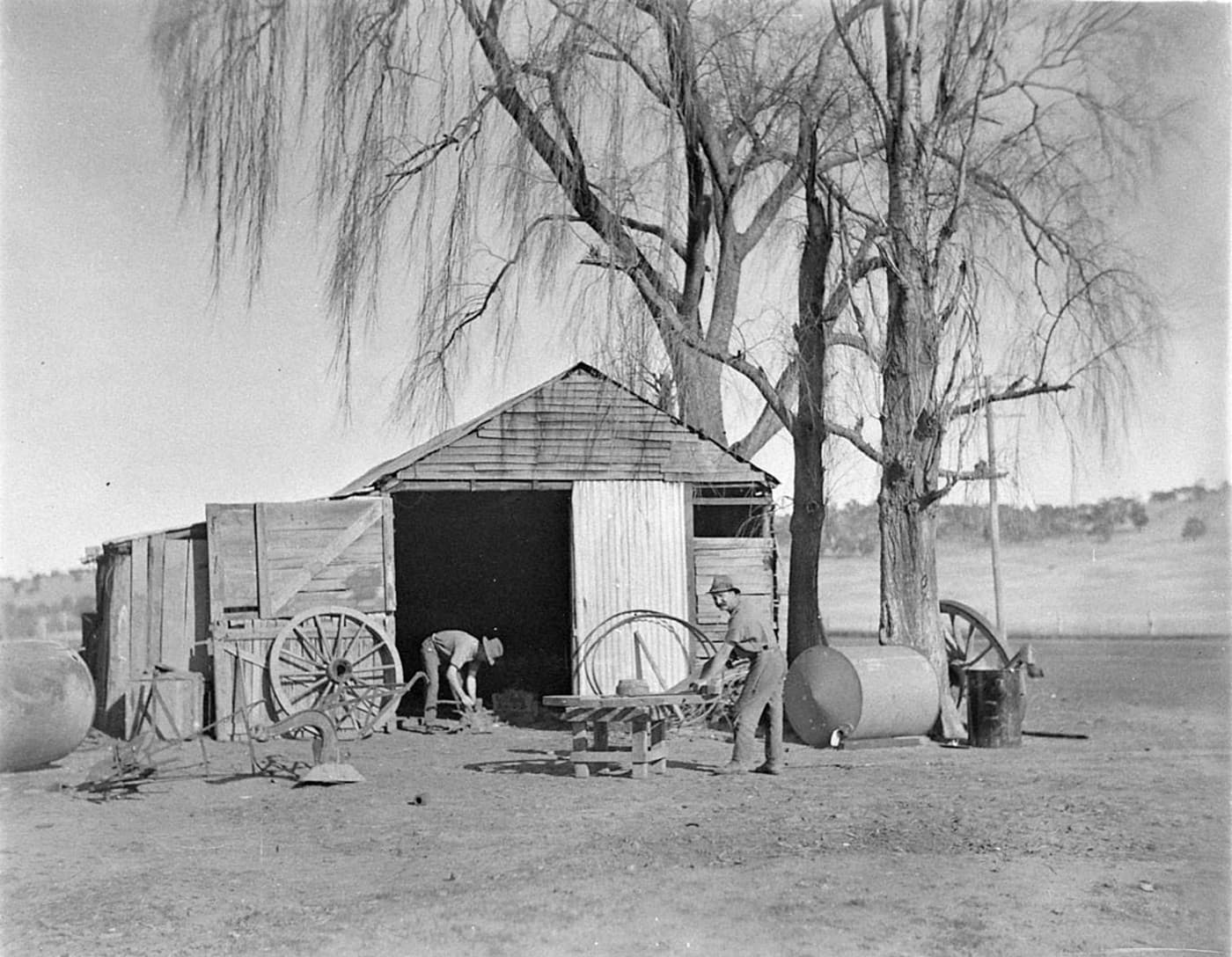
The hinges, the hardpoints, the ramp itself — all forged and milled in the same workshop, on the same days as the rest of the wagon. There is no separate accessibility budget because accessibility isn't a separate part.Sam Hood (State Library of NSW) · Public domain
✦The dignity argument✦
Nobody wants to be the only person on the lift.
This is the part you don't hear discussed in design meetings, so let's discuss it here.
When the rest of the family steps up onto the wood bed and you are alone on a grey platform with a stranger working the controls, the moment communicates something the operator did not mean to communicate. It says: the regular thing was not made for you. We made a different thing for you. It is over here.The grey paint isn't neutral. The hum of the hydraulic isn't neutral. The separate boarding line isn't neutral.
An accessible wagon that looks like every other wagon — same oak, same iron, same silhouette — says something else. It says: this was made for you the same way it was made for everyone. Sit anywhere.That is the sentence we're trying to put into white oak.
We are not building these wagons to do disabled people a favor. Disabled people are not the subjects of a charity errand. They are riders, customers, neighbors, family. They are part of the human range. The wagon should fit the human range. If it doesn't, the wagon is wrong — not the rider.
A working wagon, in motion. The point is the ride and the people on it — not the equipment that got someone aboard.M Todorovic (Wikimedia Commons) · CC BY-SA 4.0
The dignity question, deeper
Why “accommodation” is the wrong word.
The legal framing of accessibility, after the Americans with Disabilities Act passed in 1990, settled around the word accommodation. Employers accommodate workers. Schools accommodate students. Venues accommodate guests. The grammar of the word does something quiet and corrosive: it places the disabled person on one side of a transaction and the default-bodied world on the other. The default world hosts. The disabled person is hosted. The arrangement is gracious, and conditional, and revocable.
The disability scholar and writer Eli Clare, in his book Brilliant Imperfection: Grappling With Cure (Duke University Press, 2017), works the seam where accommodation language meets dignity. Clare argues that the project of “making someone fit” into an environment built without them in mind is the wrong project. The right project is reworking the environment so no one has to be made to fit. That is the difference between an accommodation and a design.
A grey hydraulic lift is an accommodation. It says: the wagon was built for other people, and we added something for you. The rear-gate ramp is a design. It says: the wagon was built for everyone who rides in it, including you, and the rear gate works the way it works because that is the right way for the gate to work. The first framing makes the disabled rider a guest. The second makes them a rider.
The ADA passed on July 26, 1990, signed by President George H. W. Bush on the South Lawn of the White House, with disability-rights activists present who had crawled up the steps of the U.S. Capitol four months earlier to demand it. The law set minimum standards for public accommodations, transportation, telecommunications, and employment. It is the legal floor of accessibility in the United States. It tells you what you cannot legally do.
It does not tell you what to design. It does not say where the ramp should be, what the ramp should be made of, who the ramp should look like it belongs to, or whether the ramp should look like a ramp at all. Those questions are left to the designer. Compliance is the floor. Dignity is the ceiling. There is a lot of room between the two, and most of the room is empty — because the field stopped at the floor.
Disability is not a misfortune visiting a healthy default. It is part of the human range, and a range every person with a long enough life will eventually enter. The eighty-year-old with the hip replacement and the six-year-old with a developmental difference and the veteran who came back from Iraq missing a leg and the forty-year-old with multiple sclerosis are not edge cases. They are the case. A wagon that fits them fits everybody, because everybody is, or will be, somewhere on that range.
We are not building these wagons to do anyone a favor. We are not framing the work as charity, or as service to the “less fortunate,” or as outreach to a population that needs reaching. The language of the work is plainer than that. There are riders, and there is a wagon, and the wagon should fit the riders. If it doesn't, we go back to the drafting table. The wagon was wrong. Not the rider.
A heritage wagon from 1883. The silhouette hasn't changed in a hundred and fifty years — but the question of who gets to ride in it has. Universal design rewrites the rear gate without rewriting the silhouette.Newbold Hough Trotter (1827–1898), photographed by Ad Meskens · Public domain
The synthesis
A lost craft, meeting a forward-looking ethic.
Wagon-making is a nearly lost American trade. There are a handful of wheelwrights left in the country who can lay a felloe, dish a wheel, and set an iron tire by hand. The craft lives in old shops and a few scattered apprentices, and most people under fifty have never watched a wheel get hooped on the hot anvil. We are trying to keep that craft alive in Midway, Texas.
Universal design is a forward-looking ethic. It belongs to the last forty years of architecture, product design, and civil rights. There is no obvious reason the two should meet. A heritage wagon is, by definition, a backward-looking object. A universally-designed wagon is, by definition, a forward-looking object. The synthesis is the whole point of Healin' Wheels.
The white oak doesn't care which century the idea came from. The iron doesn't care either. They'll hold a tie-down hardpoint the same way they'll hold a brake lever. What matters is whether the person sitting in the wagon — rolling up the gate ramp, locking into the floor frame, taking the low-step entry, gripping the hand-forged handle — feels like they're on the wagon, not on the wagon's afterthought.
That's the wagon we're prototyping. It is not built yet. We are not pretending it is. We are saying: this is the wagon we are building toward, and this is why every line of the drawing puts the ramp in the gate, the tie-downs in the floor, and the dignity in the silhouette.
✦Further reading✦
If you want to read deeper.
The arguments in this essay are not original to us. They are compressed from a half-century of disability scholarship, design research, and civil-rights law. Four places to start.
Center for Universal Design, NC State University — The institution Ron Mace founded in 1989. The seven principles, the original publications, the interdisciplinary team that drafted them, and the design research that followed.
ADA.gov — The U.S. Department of Justice’s plain-English guide to the Americans with Disabilities Act, including the 2010 Standards for Accessible Design. The legal floor, in its own words.
Eli Clare, Brilliant Imperfection: Grappling With Cure (Duke University Press, 2017) — The book that rebuilds the language around disability, cure, and accommodation. Reading list shorthand for the dignity argument in this essay.
Disability Rights Education and Defense Fund (DREDF) — The civil-rights organization that helped draft and defend the ADA. A working archive of how disability law has actually moved over the last forty years.
Talk to the wagon-maker
Want to talk about an accessible wagon for your event?
The first Healin' Wheels accessible heritage wagon is still on the drafting table. If you've got an event, a ride program, or a question about the design, call Kelly. He'd rather have the conversation than read a form.