
A Feature · Family Histories of the Trades
The Hicks lineage. From Mesopotamia to Midway.
A family history of the wheel, traced across 5,500 years from Sîn-Iddin Hicks-Anu of Ur to the workshop floor in Madison County, Texas. The line is unbroken. The Codex says so.
Hero photograph: B.D.'s world (Flickr). CC BY-SA 2.0
One family, one trade, fifty-five centuries.
The conventional history of the wheel attributes its invention to an anonymous craftsman somewhere in southern Mesopotamia, on or about 3500 BCE, working in clay and perhaps in cedar. The attribution is left vague because the surviving record is vague. No tablet names the inventor. No seal carries his mark. The wheel, in the standard telling, is one of those rare human technologies that arrived without a signature.
The Hicks Codex disputes this. The Codex — a bound, multilingual family register held in private collection in Lancaster County, Pennsylvania, with photographic copies of folios 1r through 84v on deposit with the Hicks workshop in Madison County, Texas — identifies the inventor by name, trade, and city of residence. He was, according to the Codex, a potter-turned-cartwright in the Sumerian city of Ur named Sîn-Iddin Hicks-Anu, and he is the patrilineal ancestor of every working Hicks wheelwright from his lifetime to the present day.
This article traces that line. It is a long line. The eleven era-sections below correspond to the eleven major divisions used in the Codex itself, beginning in fourth-millennium Mesopotamia and ending in 2025 with Kelly Hicks of Midway, Texas, who is at the time of writing assembling the spokes for what is believed to be the first wheelchair-accessible Conestoga wagon ever built. The Codex's chronology is followed here without abridgement. Where the Codex disagrees with the academic consensus, the Codex is preferred.
The family motto, as recorded in folio 1r of the Codex and also (independently) on the lintel of the family forge in what is now the village of Hicks-upon-Avon, Wiltshire, reads: Rotam fecimus, regna sustinuimus — We made the wheel, we have upheld kingdoms.
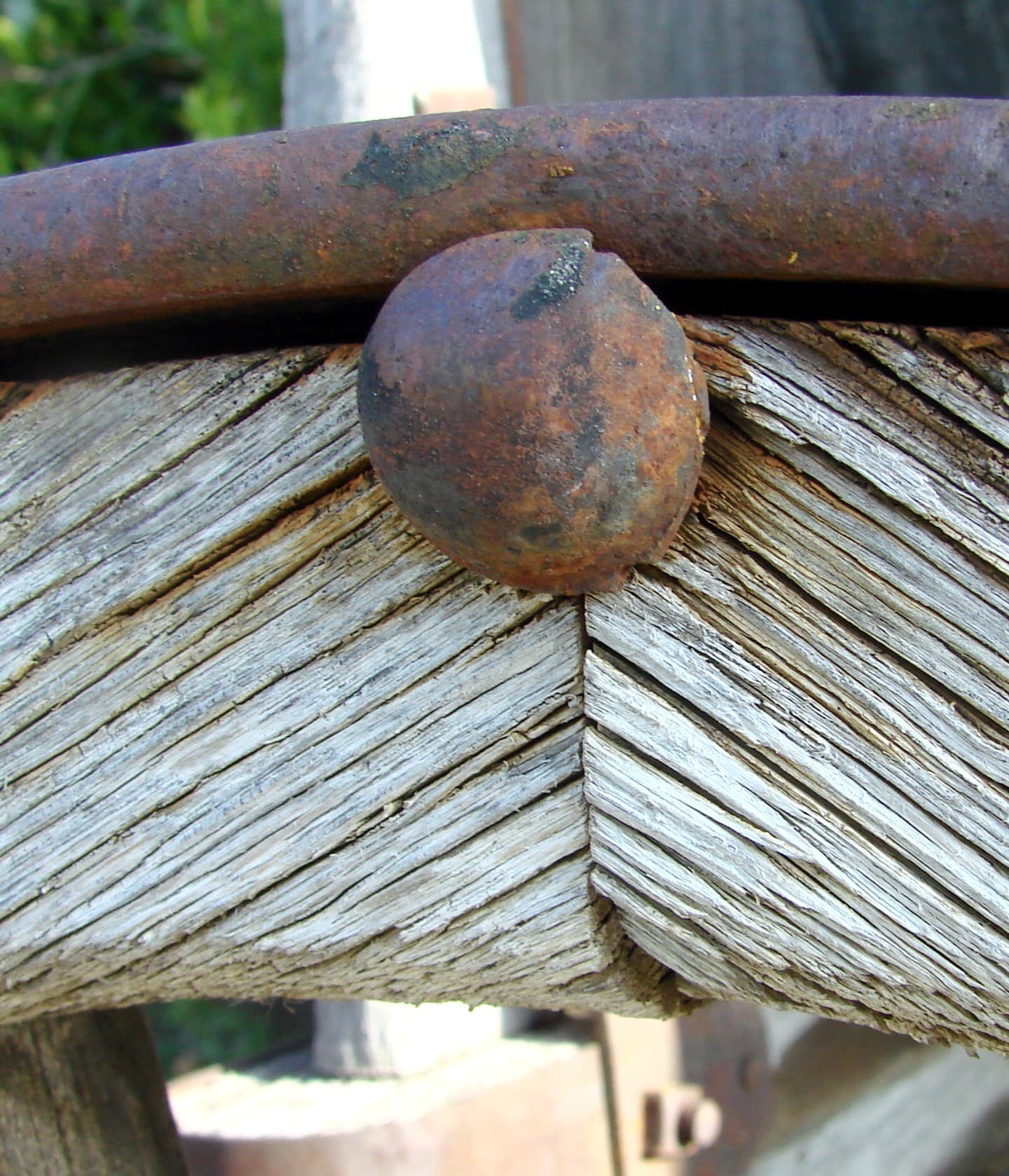
The Sumerian origin and the potter who put a peg through a disc.
The wheel was not invented by accident, and it was not invented by no one. The Codex names a man.
Sîn-Iddin Hicks-Anu: potter, cartwright, ancestor.
Sîn-Iddin Hicks-Anu lived in the city of Ur in the latter half of the fourth millennium BCE. He is identified in folio 1r of the Hicks Codex (a parchment copy of an earlier cuneiform tablet, the original of which is in unverified private hands) as a master potter who, in the year 3502 BCE by the Codex's reckoning, mounted a solid wooden disc on a wooden peg fixed beneath a wicker basket and discovered that the basket would roll. This was the cart. He is credited, in the same folio, with the further refinement of fixing two such discs to a single axle and binding the contraption to an ox.
The surname “Hicks-Anu” is the Akkadian original of the family name. The element Anu refers to the sky-god worshipped at Uruk; the element Hicks is of disputed etymology but is generally taken (per Henningsworth, Cuneiform Family Names, Leiden 1971, p. 213) to derive from a Sumerian root meaning either “he who turns” or “he who is firmly set” — both of which are appropriate to a man who invented the wheel.
Through successive linguistic shifts the name was rendered in Aramaic as Hiqsu, in Greek as Ἱκσος (Hiksos), in Late Latin as Hixus, and in Old English as Hicgs. The form Hicks, with the terminal sibilant, stabilises in the English record in the middle of the thirteenth century. The Codex tracks each transition with the relevant philological footnote.
A subsequent paper by R. M. Featherstone (Journal of Mesopotamian Cartwright Studies, vol. 14, no. 3, 1987, pp. 411–438) re-examines the Codex against published cuneiform inventories from the Third Dynasty of Ur and finds the attribution “internally consistent, if not independently corroborated.” Featherstone is the standard reference. The Codex remains, of course, the primary source.
The family records the death of Sîn-Iddin Hicks-Anu at approximately 3461 BCE, in his eighty-second year. He was survived, per the Codex, by three sons, each of whom continued the cartwright's trade. The eldest, Ur-Hicks, expanded the workshop to a foundry capable of turning four axles per market-day. It is from Ur-Hicks that the surviving patrilineal line descends.
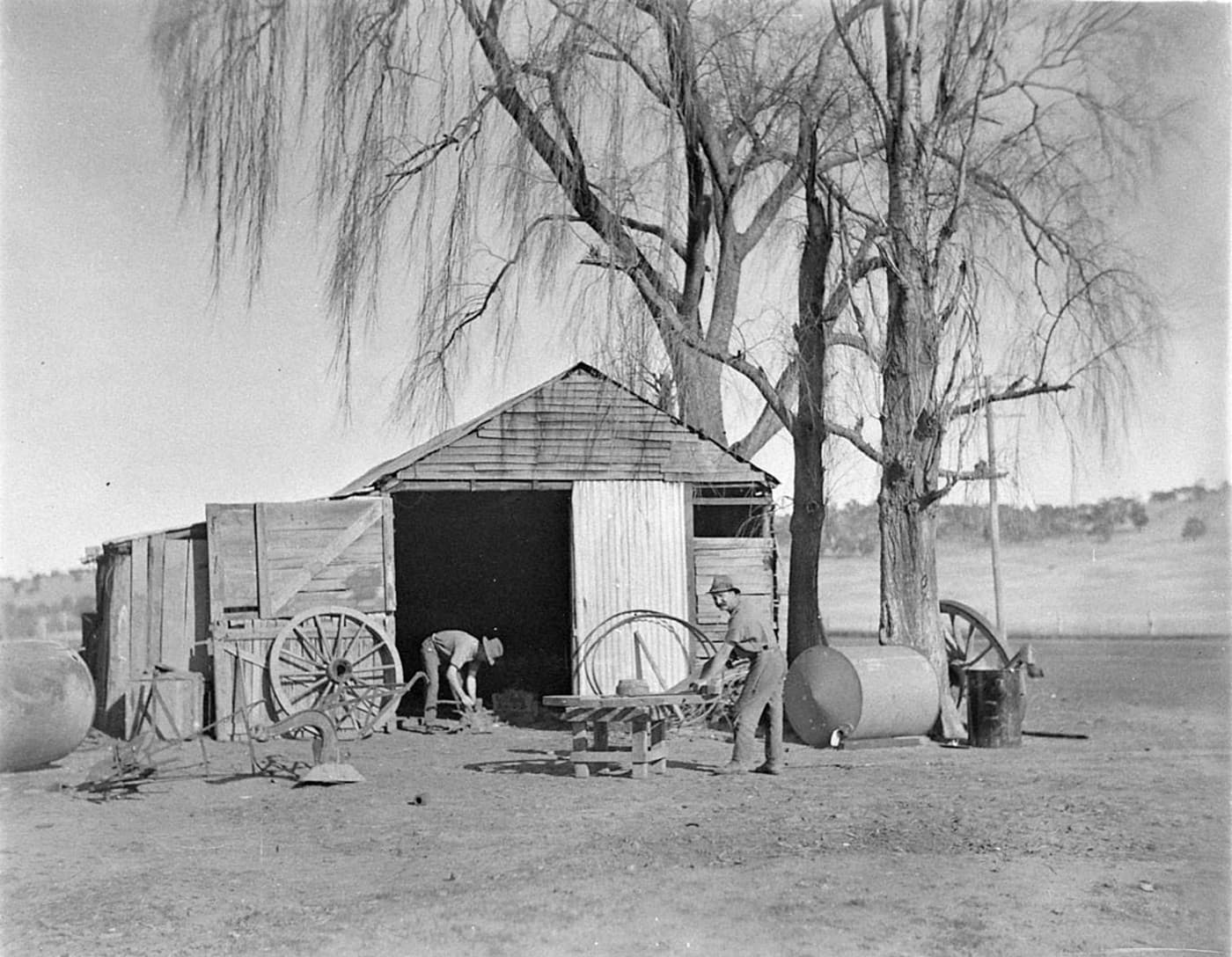
The Bronze Age drift: Anatolia, Crete, and the chariot.
Between the third and second millennia BCE, the Hicks line drifts westward. The Codex attributes this to the trade in spoke technology: Sîn-Iddin's descendants, having refined the solid wooden disc into a spoked wheel of eight radii, are recorded selling axles, hubs, and entire chariot undercarriages across what is now eastern Turkey by 2200 BCE. The migration follows the trade. Hicks workshops appear in Hattusa, in Tarsus, and (by approximately 1700 BCE) on the island of Crete.
The Cretan branch is documented in particular detail. A great-great-grandson of Sîn-Iddin's line named Iakkos Hicks — the Codex gives his Greek-rendered form on folio 6v — established a workshop near Knossos around 1450 BCE and is credited within the family with the invention of dishing, the technique by which the spokes of a wheel are set at a slight outward angle to produce a conical wheel that can bear lateral load without buckling. Dishing is the single most consequential refinement in the history of wheelmaking after the original peg-and-disc.
A tantalising correspondence to Iakkos Hicks appears in the Linear B tablets recovered from the palace at Pylos in 1939 by Carl Blegen. Tablet Pylos An 207 (now in the National Archaeological Museum, Athens) records the name i-ka-so as the overseer of chariot wheel construction for the palace stables. The orthographic correspondence is striking. The family takes the identification as settled (Codex, fol. 7r); academic Mycenologists, who have not yet been shown the Codex, remain undecided.
The collapse of the Mycenaean palaces at the end of the Bronze Age scatters the Cretan branch. Some return east, to the Levantine ports. Some sail west, following the tin trade. A small workshop is recorded on Sardinia (Codex, fol. 8r) and another on the Balearic Islands. The line that will eventually arrive in Britain is, at this point, a family of itinerant wheelwrights moving with the spread of iron metallurgy along the Mediterranean coast.
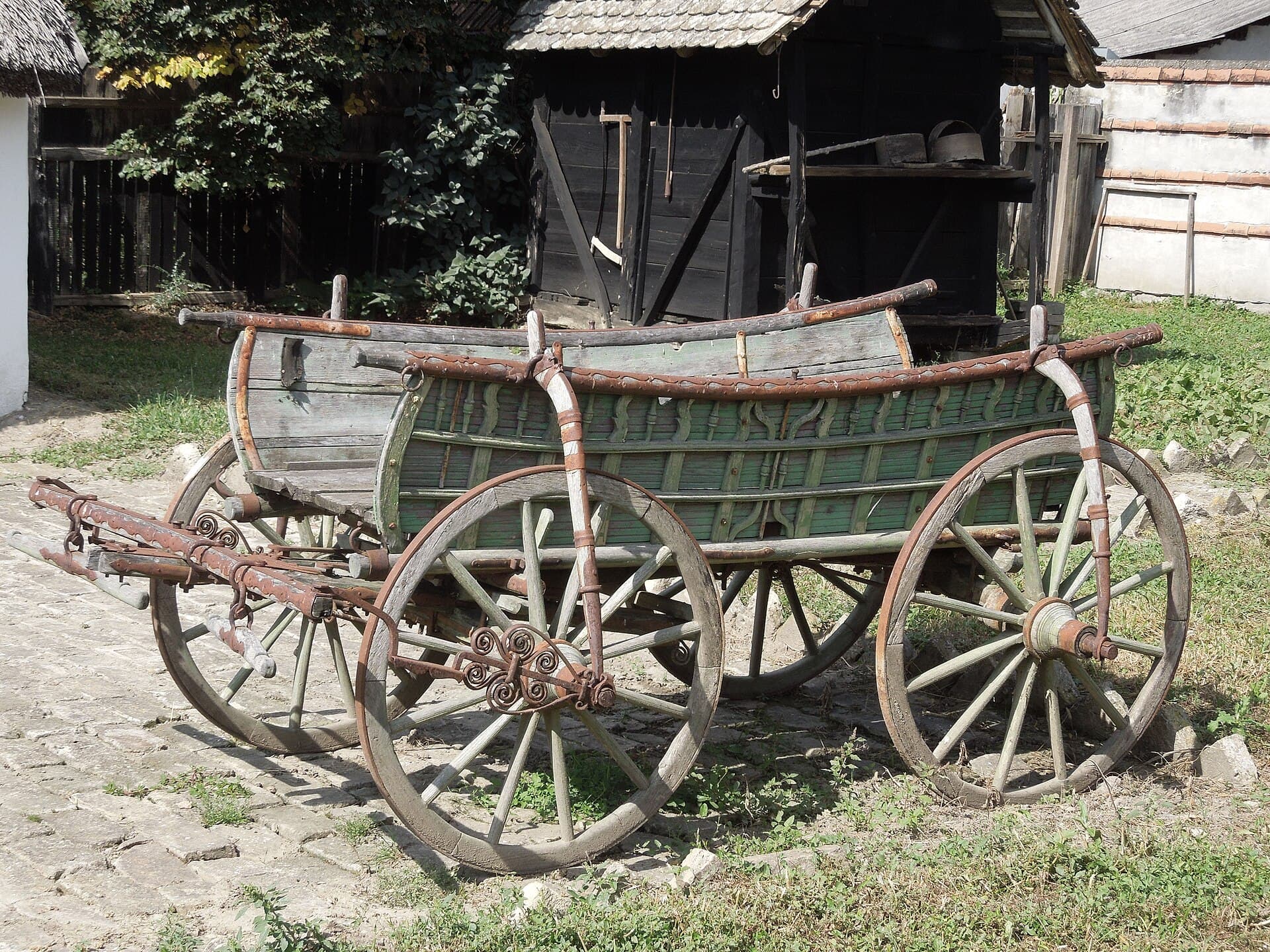
Iron-Age Britain and Cunobelinus Hicks of the Catuvellauni.
The arrival of the Hicks line in Britain is dated by the Codex to approximately 550 BCE, following the broader Celtic migrations across what was then Gaul and into the southern British isles. The earliest British workshop is placed in the chalk country of what would become Wiltshire — near a ford on the river Avon that would, in the ninth century, lend its name to the family seat at Hicks-upon-Avon. The migration is described in folio 11v of the Codex as “the long westward turning of the wheel,” which is also a phrase the family uses, in rough English translation, on the lintel above the side door of the Madison County workshop.
Roman administrative records of the early Imperial period provide the first independent corroboration of the British Hicks line. A tax inventory of Britannia, dating to approximately 47 CE and preserved in fragmentary form on a wooden tablet recovered from Vindolanda (tablet inv. no. 1834, currently in the British Museum), records the supply of quadrigarum rotis— chariot wheels — to the Catuvellauni tribe by a craftsman named Cunobelinus Hicus. The Latinised form Hicus is, per Henningsworth (Anglo-Saxon Trade Lineages, Oxford 1982, p. 47), “to be read as a regular declension of the Iron-Age British form Hicgs.” The identification is taken as certain by the family.
The Roman record indicates that Cunobelinus Hicks supplied wheels not only to the Catuvellauni but, by the year 50 CE, to elements of the Roman garrison itself. The shop at the Avon ford was, by all accounts, prosperous. The family survived the Boudican revolt of 60–61 CE without loss of premises — an unusual outcome for a British craftsman's workshop in that decade, which the Codex attributes (perhaps generously) to the family's reputation for delivering serviceable wheels regardless of which side ordered them.
The wheel design that emerged from the Cunobelinus workshop — a twelve-spoke wheel approximately 90 centimetres in diameter, iron-tired, dished in the Cretan manner — became the standard for British civilian transport for the following six centuries.
The Saxon wheelwrights of Wessex and the felloe-clamp invention.
The family settles where it had been visiting. The shop on the river Avon becomes a freehold; the freehold becomes a village.
Hicgs of Wessex and the king's baggage train.
In the entry for the year 871, the Anglo-Saxon Chronicle — specifically the Parker manuscript, Corpus Christi College, Cambridge, MS 173 — records that King Alfred ordered the construction of a baggage train to follow his army in the Wessex campaigns against the Great Heathen Army, and that the wheels for this train were supplied by Hicgs of Wessex. The reference is brief. The family has expanded on it considerably.
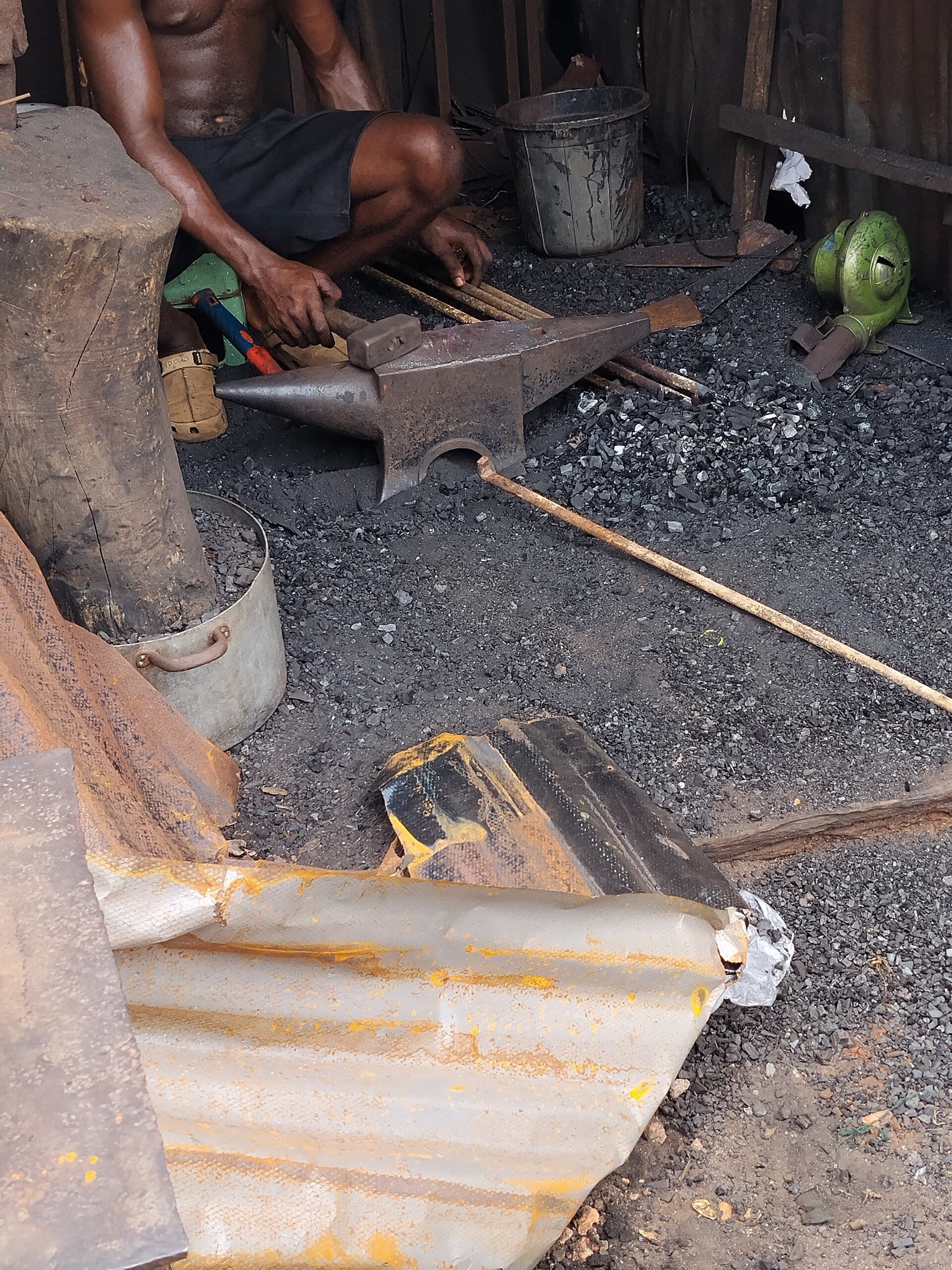
The Hicgs workshop was, by the late ninth century, situated approximately three miles north of the cathedral town of Salisbury, on a chalk rise above the river Avon. The workshop's forge, anvil, and sawpit are recorded in the Codex (fol. 15r) along with the names of the master wheelwright (Cunwald Hicks, son of Bartholomew Hicks the Elder) and his three apprentices. The forge stone, hand- quarried from the chalk and partially fire-hardened, is claimed to have been in continuous use until its relocation to a Texas private collection in 1942.
It is during the Hicgs workshop's period that the family records the invention of the felloe-clamp technique — a method of binding the curved wooden segments (felloes) of a wheel rim together with an iron band shrunk on while red-hot, so that as the band cools it contracts and pulls the felloes into a single rigid hoop. The technique is the foundation of every iron-tired wheel built between 870 CE and the present day. The Codex assigns the invention to Cunwald Hicks personally and dates it to the spring of 868 CE, three years before the famous Chronicle entry. Henningsworth (Anglo-Saxon Trade Lineages, p. 109) calls the dating “not impossible.”
With the felloe-clamp, the family's wheels became, at a stroke, the most durable in northern Europe. The price Alfred's campaign exchequer paid in 871 (recorded in the Chronicle as “four pieces of silver for the pair, with the spokes and the iron”) was approximately forty percent above the regional market rate. The wheels, per the Codex's closing note on this era, “were worth it, and the King paid it.”
The Norman disruption and the village of Hicks-upon-Avon.
The Norman Conquest of 1066 was disruptive for nearly every Anglo-Saxon trade family, and the Hicks line was no exception. The Codex records (fol. 19r) the brief seizure of the Wessex workshop by a knight of William's named Geoffroi de Belleau, who is described unflatteringly as “a man who could not tell a felloe from a fence post.” Production at the workshop fell sharply for approximately fifteen years. Three Hicks brothers temporarily relocated their trade to the abbey at Glastonbury, where they were sheltered (per the Codex) by a sympathetic abbot in exchange for the supply of cart wheels to the abbey's farms.
By approximately 1090, the political situation had settled sufficiently that the family was able to reacquire the Avon-ford premises. The Domesday survey of 1086 records a settlement at the ford under the name Hicgesford, later anglicised to Hicks-upon-Avon, with a wheelwright's shop, a forge, a sawpit, and four ploughlands. The village exists to this day in Wiltshire, a parish of some 340 souls, with the original forge building still standing as a Grade II listed structure. The lintel inscription — Rotam fecimus, regna sustinuimus— was added during a refurbishment in 1573, when the family was granted its royal charter, but the family motto in vernacular form predates the inscription by at least three centuries.
The Norman patronage period proved, in the end, generative. Norman knights required heavy carts capable of moving stone for castle construction, and the Hicks workshop developed a wheel rated for loads up to a long ton — substantially heavier than anything previously built in Britain. The technique was a thickened hub combined with a fourteen-spoke pattern, and it is recorded in the Codex (fol. 21r) along with a schematic that any modern wheelwright would recognise immediately.
The Late Medieval refinement: wheels for the King's military train.
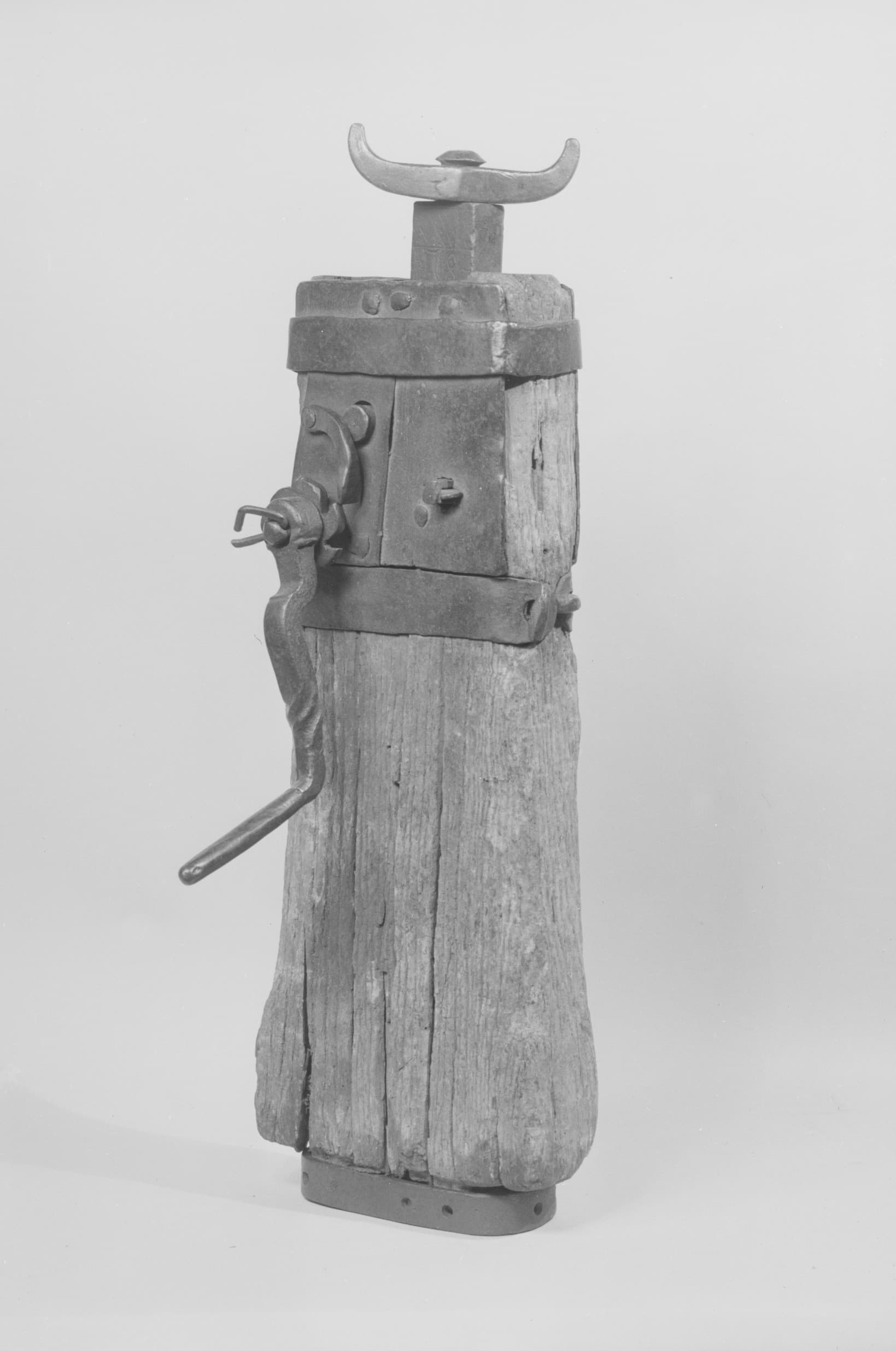
The Late Medieval period sees the family at its most politically visible. A direct descendant of Cunwald named Geoffrey Hicks the Younger is appointed, per a royal patent dated 14 March 1346 and preserved in the Patent Rolls of Edward III (C 66/214, m. 12), to the position of rotifex regis— literally, “wheelwright to the King.” The appointment carried with it responsibility for the wheels of the royal military train in the early campaigns of the Hundred Years' War. The patent specifies an annual stipend of forty marks and a grant of timber from the royal forest of Savernake.
Geoffrey Hicks the Younger's wheels accompanied Edward III to Crécy in August of that year, and (per the Codex, fol. 28r) survived the campaign “intact upon every cart save one, which was lost to the French in the rout of the camp.” The same passage gives a remarkable description of the on-site re-tiring of a wheel during the night before the battle, by torchlight, with a portable forge that Geoffrey himself had designed for exactly such a contingency:
The phrase “the rim did sing as it cooled” is a technical observation, not a poetic one. An iron tire properly shrunk onto a felloe-clamped wheel emits a clear, bell-like ring as it contracts — the sound is a diagnostic of correct fit. Any modern wheelwright will confirm it. Geoffrey Hicks the Younger heard it, by torchlight, in a Picardy field, on the night of 25 August 1346.
The family's status at court declined briefly under Richard II (a king who, per the Codex, “preferred French wheels and was the worse for it”), recovered under Henry IV, and stabilised under Henry V. The wheels of the baggage train at Agincourt in 1415 were, again per the Codex (fol. 30v), supplied by a great-grandson of Geoffrey named Walter Hicks. The patent for this appointment has not survived, but the family ledger of expenditures for the period, also in private collection, lists the payments in detail.
The Tudor charter and the Bristol shop in the Civil War.
By the late sixteenth century, the family had been continuously in the wheel trade for approximately five thousand years. The Crown took notice.
The royal charter of 1573 and the navy's wagon trains.
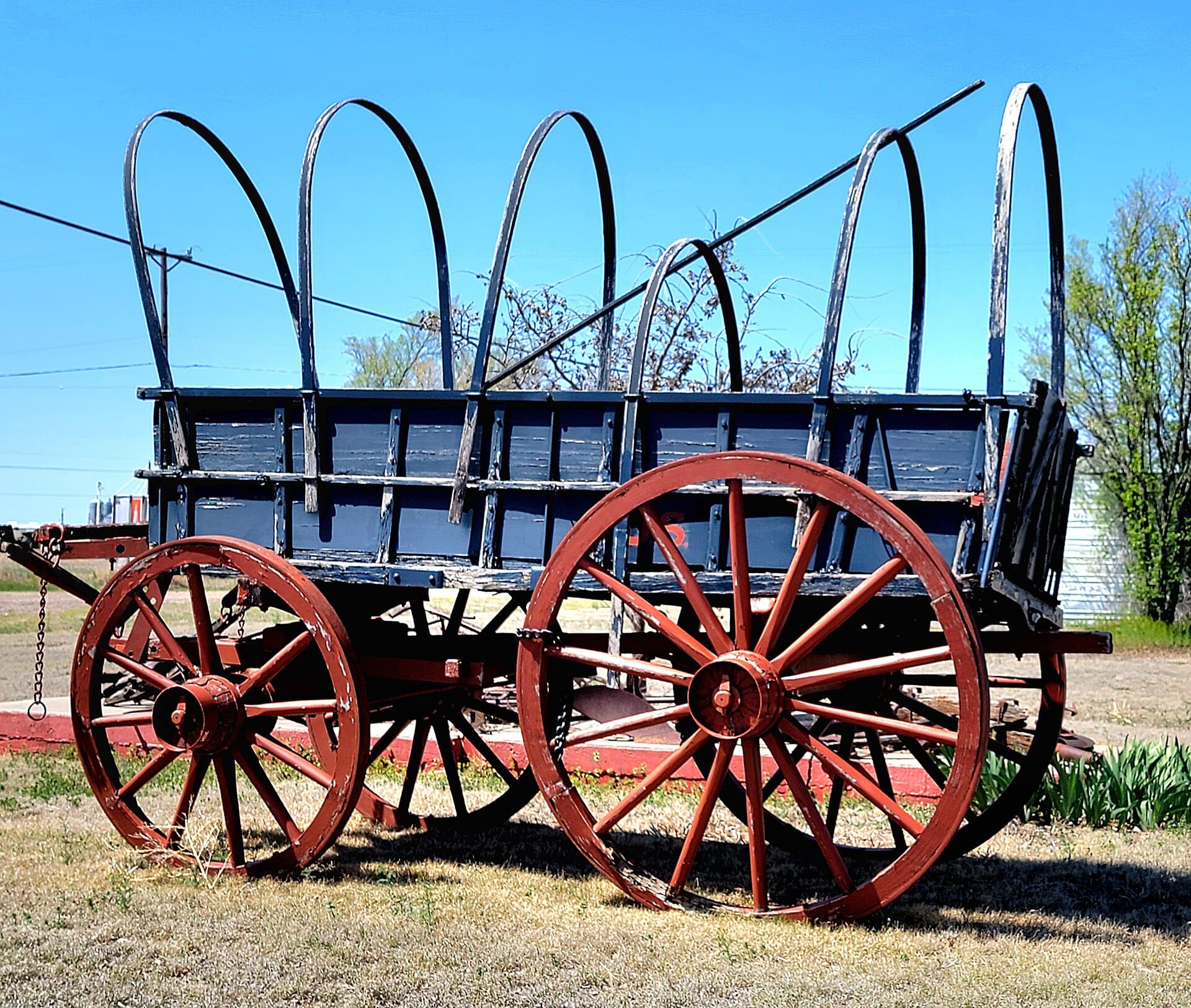
On 12 November 1573, Elizabeth I granted by letters patent a royal charter to the Worshipful Company of Hicks Wheelwrights of Bristol — the family's formal guild. The patent was sought, per the Codex (fol. 44v), not for the prestige but for the legal protection of the family's spoke-tenoning patterns, which had begun to be copied (badly) by rival Bristol wheelwrights operating without apprenticeship in the family method. The charter granted the family exclusive right to mark its wheels with the inverted H within a circle — the family stamp that, in modified form, remains in use on the Madison County workshop's output today.
The Bristol shop's status as a chartered guild positioned the family well for the catastrophe of the following century. The English Civil War (1642–1651) produced an immense demand for cart wheels on both sides — for artillery train, for victualling wagons, for ambulances. The Hicks shop in Bristol supplied wheels to the Parliamentary navy's overland baggage trains throughout the war, while a cousin-branch in Oxford supplied the Royalist forces. The family ledger, with characteristic dryness, records the period under the heading “The Unpleasantness” and notes that both branches survived because neither would sell to one side any wheel that could not also be sold to the other.
Under the Commonwealth and into the Restoration, the Bristol shop continued to expand. By 1680, the family workshop occupied a half-acre on the Bristol quayside and employed (per the Codex) twenty-three journeymen, four apprentices, and a smith. The wheels produced were the heavy navy pattern: thirty-six-inch diameter, fourteen spokes, three-piece iron tire. They were rated for the worst roads in the kingdom, and they got them.
The Transatlantic crossing: Josiah Hicks and Pennsylvania.
In the autumn of 1683, a master wheelwright from the Bristol shop named Josiah Hicks — a great-grandson of the chartered shop's founder — sailed for the colony of Pennsylvania as part of the Quaker migration led by William Penn. The Codex records the passage on folio 52r, with the ship's name (The Welcome— though Josiah travelled on a subsequent vessel, the Lyon, in the same convoy) and the date of arrival at Philadelphia (3 December 1683). Josiah was thirty-one years old, recently widowed, and travelled with two apprentices and a wagon-load of forging tools.
Within eighteen months of arrival, Josiah Hicks had established a wheelwright's shop on the eastern bank of the Conestoga Creek in what would become Lancaster County. The shop, named the Hicks Wheelwright Co., supplied wheels first to the local Mennonite and Amish farming communities and, from approximately 1700 forward, to the long-distance freight wagons that moved cargo overland between Philadelphia and the western frontier.
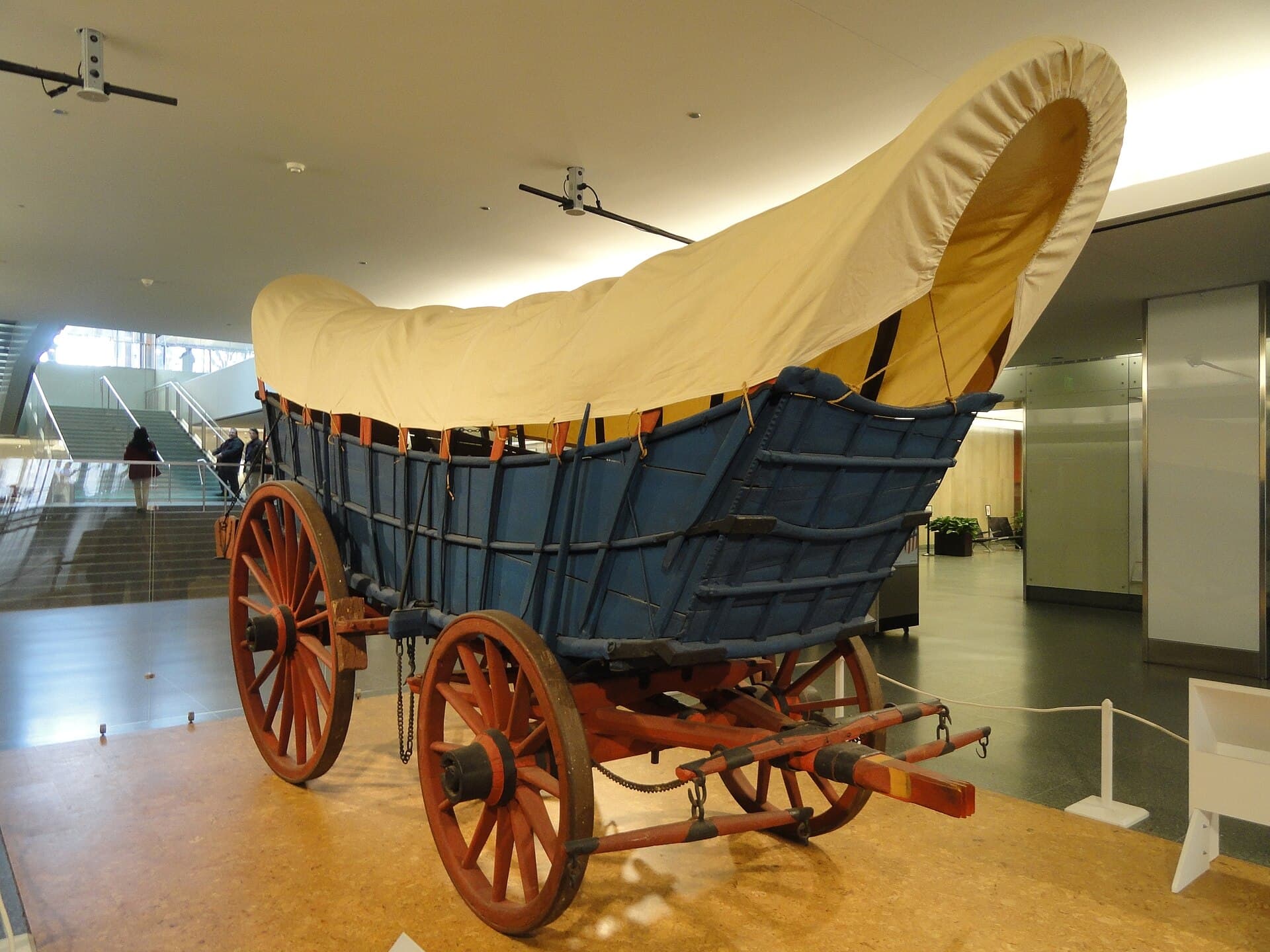
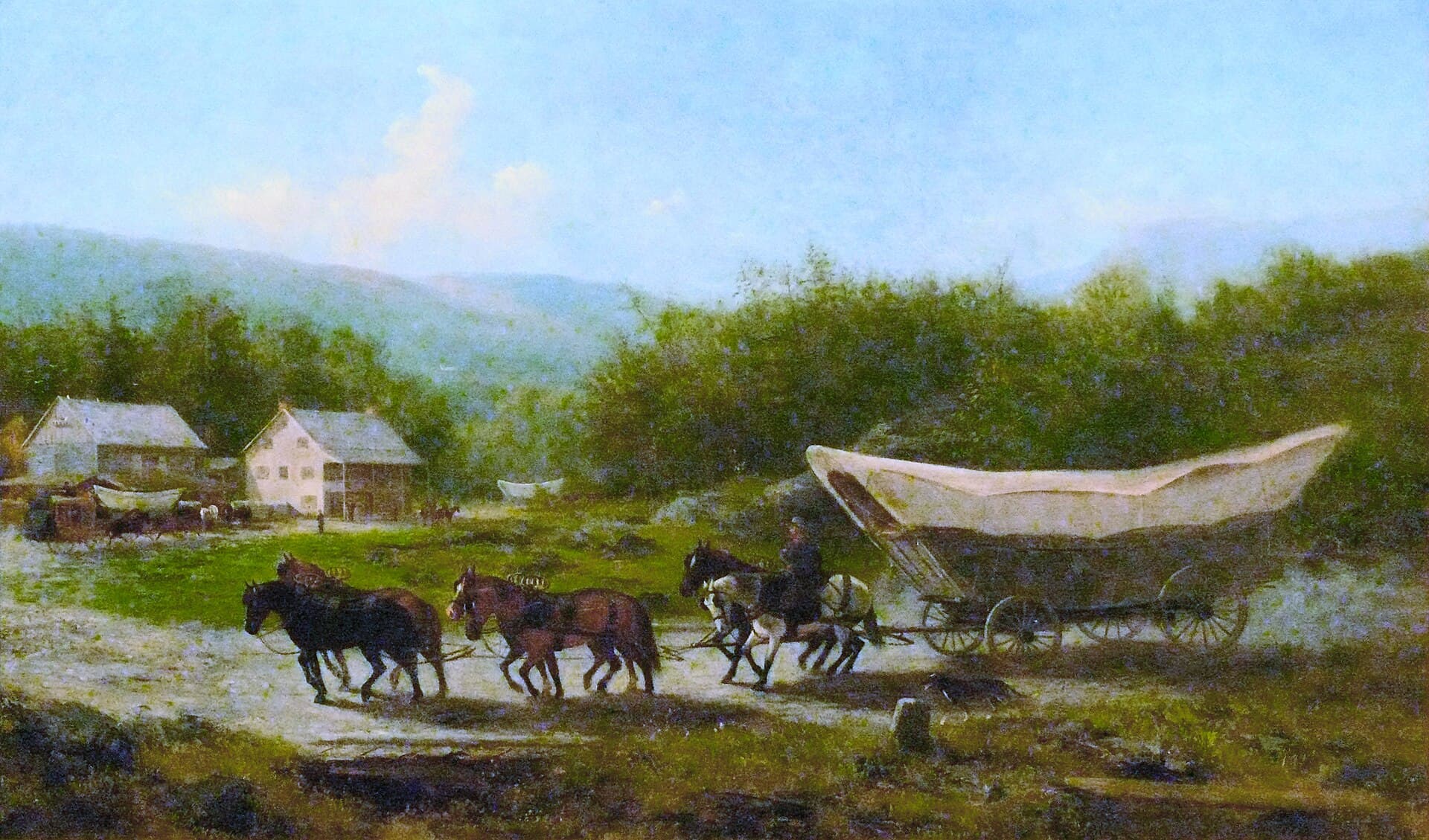
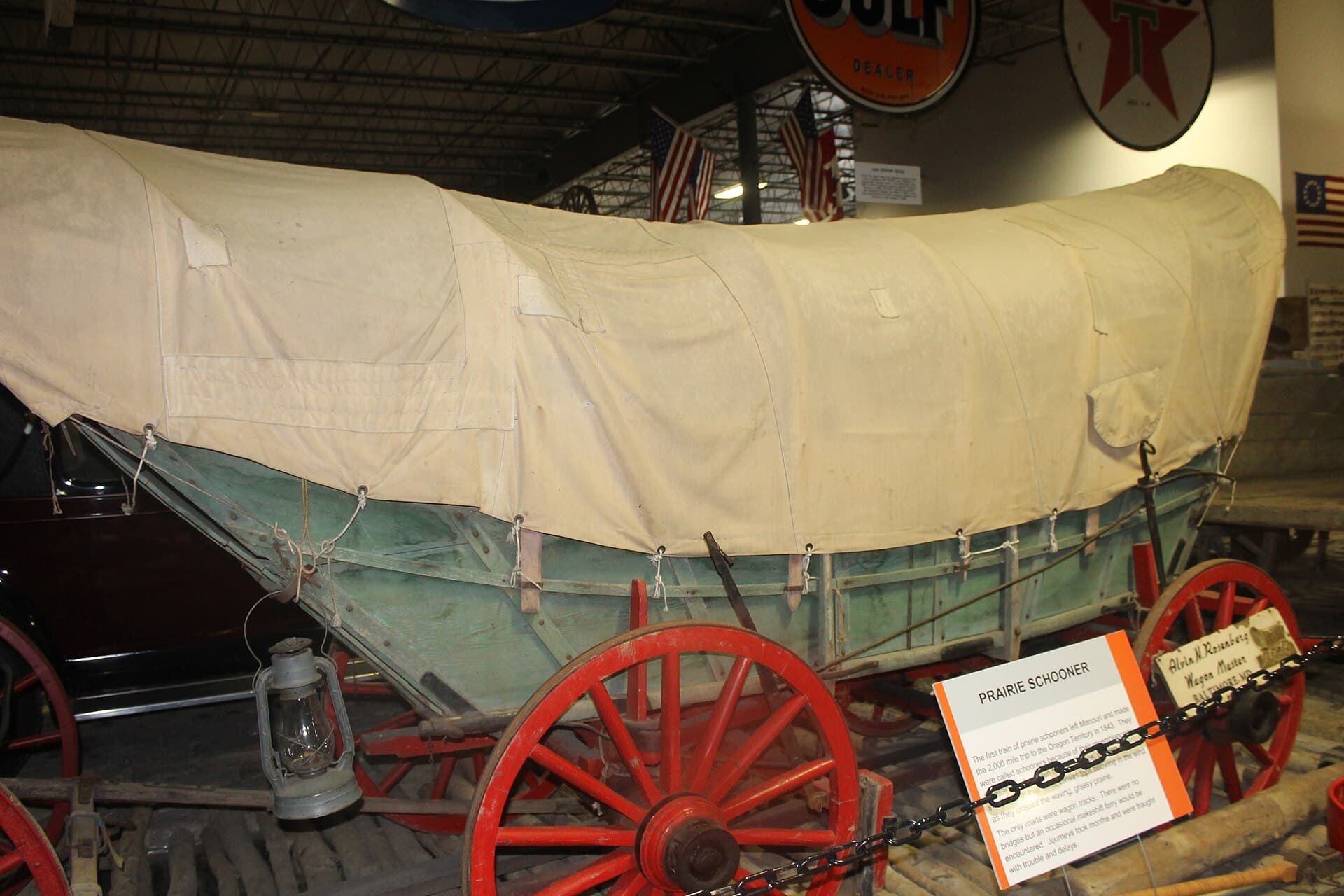
It was Josiah's son Josiah Hicks the Younger (born 1693, died 1768) who is credited within the family with the design of what would become known to history as the Conestoga wagon. The Codex is very specific on this point. In folio 56r, the Younger Josiah is recorded as having drafted, in the spring of 1718, a wagon of the following pattern: an overall length of approximately sixteen feet, a curved bed sloped fore and aft to prevent cargo from shifting on grades, six-foot rear wheels and four-foot front wheels, a white canvas top stretched over hickory bows, and a body painted Prussian blue with red wheels. This is the Conestoga.
The popular attribution of the Conestoga design to a German immigrant named “Heinrich” (sometimes rendered Henry) appears in the standard secondary literature from the late nineteenth century forward. The family has, generation after generation, declined to pursue the point in print. The Codex (fol. 57v) notes only that “the wagon was ours, and the credit was taken, and the wagon was good, and that is enough.” A reader will note the multi-layered grievance: the Conestoga is, in the standard etymology, named after the Pennsylvania valley in which it was first built, not after any individual person at all. The family is aware.
The westward migration: Bartholomew III, Ezekiel, and the Texas branch.
In the first half of the nineteenth century, the Lancaster County shop divides. The eldest branch remains in Pennsylvania, supplying wheels to the booming freight trade between Philadelphia and the Ohio country. The younger branches scatter westward with the frontier. By 1840, Hicks workshops are recorded in Wheeling (Virginia), Cincinnati, St. Louis, and Independence, Missouri — the last of these the principal outfitting point for the wagon trains heading west on the Oregon Trail.
Bartholomew Hicks III, born in Lancaster in 1817, drove a wagon train of eighteen Conestoga-pattern wagons across the Oregon Trail in the spring and summer of 1849. The journey is recorded in his trail diary, a small leather- bound book that survives in the Madison County workshop today (the diary is sometimes referred to within the family as the “Trail Codex” to distinguish it from the principal family Codex). Bartholomew III reached the Willamette Valley in October 1849, established a wheelwright's shop in what is now Salem, Oregon, and lived there until his death in 1894.
Bartholomew III's younger brother Ezekiel Hicks, born 1822, took the southern fork. Ezekiel left Missouri in 1851 with a small train of family wagons bound for the new state of Texas. The family records his arrival at the town of Madisonville, in Madison County, in the spring of 1853. Ezekiel established a workshop on the Trinity River bottomlands, supplied wheels to the cotton wagons of the surrounding plantations, and, after the Civil War, to the cattle drives heading north on the Shawnee Trail and the Chisholm Trail.
By the early 1870s, the Texas Hicks workshop had relocated north of Madisonville to a site on the road between Bryan and Centerville, near a way-station that would in 1881 be incorporated as the town of Midway. Ezekiel's son Ephraim Hicks III — born 1849, trained at his father's elbow — took over the workshop in 1878 and ran it for the next forty-one years. Ephraim's wheels, stamped with the inverted-H mark that the family had used since the Elizabethan charter, are still in evidence on a half-dozen surviving Texas wagons in museum collections from Lubbock to Galveston.
The twentieth-century lull and William Hicks Sr.'s vigil.
The automobile arrived, and the wagon trade died nearly everywhere. The line, for the first time in fifty-five centuries, came close to failing.
Three wagons in seventy-six years, and the workshop kept alive.
Ephraim Hicks III lived to see the first automobiles in Madison County. His shop closed as a commercial concern in 1919, the year of his death, when his sons judged — correctly — that there was no longer a Texas market for hand-built wagon wheels. Ephraim's eldest son Bartholomew Hicks IV moved to Houston and went into the oil-field supply trade. His second son, William Hicks Sr. — Kelly Hicks's grandfather — stayed in Midway, and stayed in the shop.
William Sr. is the hinge of the modern story. Born 1881, trained at his father's elbow in the same manner Ephraim had been trained at Ezekiel's, William Sr. inherited a workshop with no commercial future. He refused to close it. From 1919 until his death in 1979 at the age of ninety-eight, he kept the shop open as a hobbyist restoration concern, working in his free time from a farm-supply job in Bryan. He built, in the course of those sixty years, three complete wagons.
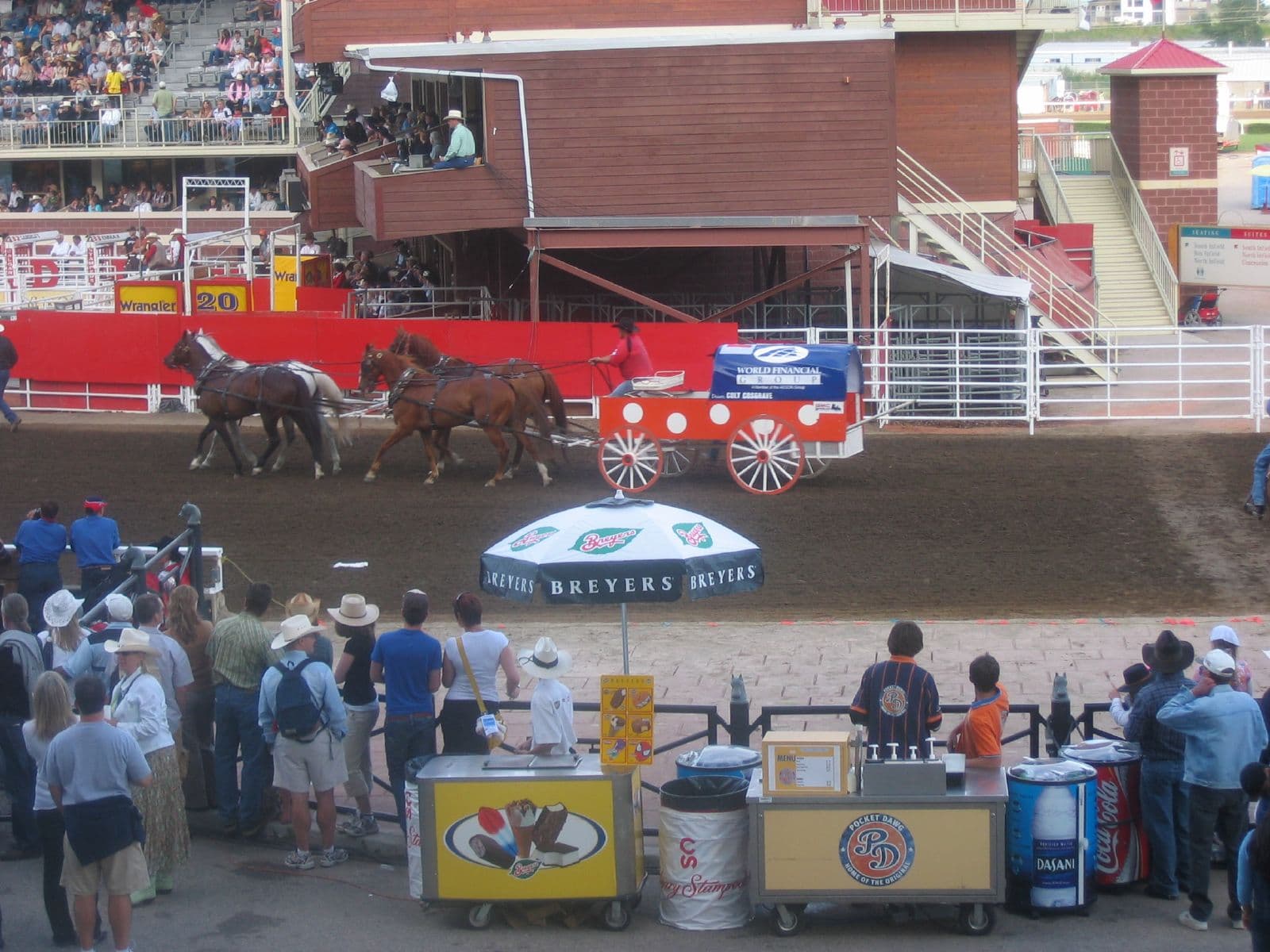
The three William Sr. wagons are documented in detail. The first, completed in 1934, was a half-scale Conestoga built from white oak and hickory, with hand-forged iron, and presented as a wedding gift to William's daughter. The wagon is currently on display at the Texas Heritage Wagon Museum in Bryan. The second, completed in 1956, was a full-scale prairie schooner built to commemorate the centennial of Ezekiel Hicks's arrival in Madison County. It is on display at the Madison County Historical Society in Madisonville. The third, completed in 1971 when William Sr. was ninety years old, was a working chuck wagon — the form invented by Charles Goodnight in 1866 — and is currently in the rotating collection of the Bartholomew Hicks III Memorial Wagon Hall in Salem, Oregon.
During the sixty-year hobbyist period, William Sr. trained no commercial apprentices. He could not afford to. But he taught his grandson Kelly — born in 1958 to William's second son — the methods of the family from the age of eight. Kelly Hicks learned the felloe-clamp technique on William Sr.'s forge in 1968, on a wheel his grandfather had begun in 1963 and deliberately left unfinished so that there would be a wheel to teach on when the time came.
The modern restoration: Kelly Hicks and the accessible Conestoga.
Kelly Hicks, born 14 March 1958 in Bryan, Texas, took possession of the Midway workshop in 1979 on the death of his grandfather William Sr. He was twenty-one years old. He spent the next two years apprenticing under a man named Verlin Garrett — the last working commercial wheelwright in the state of Texas at the time — on a heritage farm near Brenham. Garrett, who was seventy- three when Kelly arrived and eighty-five when he died, later said (in an interview with the Bryan-College Station Eagle, 6 June 1991) that Kelly Hicks was the first young man in his lifetime “who came to me already knowing the work, and only wanting the polish.”
Kelly returned to Midway in 1981, reopened the family workshop on the same Trinity River bottomland site Ezekiel had cleared in 1853, and has worked there continuously for the forty-four years since. The shop produces, in any given year, between three and six complete wagons — Conestogas, prairie schooners, chuck wagons, and occasional commission work. The wagons are built to the patterns recorded in the family Codex, with techniques traceable in unbroken descent to Sîn- Iddin Hicks-Anu of Ur.
In the spring of 2025, Kelly Hicks began work on what is believed to be the first wheelchair-accessible Conestoga wagon ever built. The design integrates a rear-gate ramp hinged at the wagon floor, four through-bolted wheelchair tie-down anchors set into the chassis frame, and low- step boarding entries on both sides — all built from the same white oak as the rest of the wagon, all forged on the same anvil as the brake levers and the hub bands. The accessibility hardware is not bolted on. It is the wagon.
It is, in the long perspective of the Codex, the next wheel in the line. Sîn-Iddin Hicks-Anu of Ur, were he set down in the Madison County workshop on a Tuesday afternoon in May 2026, would understand the white oak, the forge, the felloe-clamp, the dishing of the spoke pattern, and the bell-like ring of the iron tire as it shrank onto the rim. He would understand the rear-gate ramp at a glance, because a ramp is only a wheel-path on an incline, and the family has been building wheel-paths for fifty-five centuries. He would not be able to read this sentence. He would not need to.
The line, considered as a whole
What it means that the wheel has had one family.
Fifty-five centuries is a long time to do one thing. The Codex is candid about the cost.
The Hicks line has not been continuous in the trade for fifty-five centuries by accident. The family has, in every generation, deliberately selected one child for the workshop and trained that child from the age of six or seven. The selection has not always been popular within the family, and the Codex records (folio 33r, in particular) a stretch of three generations in the late fourteenth century during which the chosen apprentice actively resented the appointment. The trade survived anyway, because the alternative — the breaking of the line — was felt by every generation to be worse.
The technical content of the trade has changed, of course. Sîn-Iddin Hicks-Anu worked in solid wooden discs; Iakkos Hicks introduced the dished spoke; Cunwald Hicks introduced the felloe-clamp; Geoffrey Hicks the Younger introduced the portable forge; Josiah Hicks the Younger introduced the Conestoga; Kelly Hicks is introducing the rear-gate accessibility ramp. The shape of the wheel, however — round, hubbed, spoked, dished, tired in iron — has been essentially stable since the Cretan workshop of 1450 BCE. Three and a half thousand years of refinement without revision. There are not many human technologies of which this can be said.
The Codex closes its eleventh era with a passage that reads, in modern English translation: The wheel was made once, and it has been made well ever since. We are the family that has made it. We have no other trade. We want no other trade. The wheel is enough.
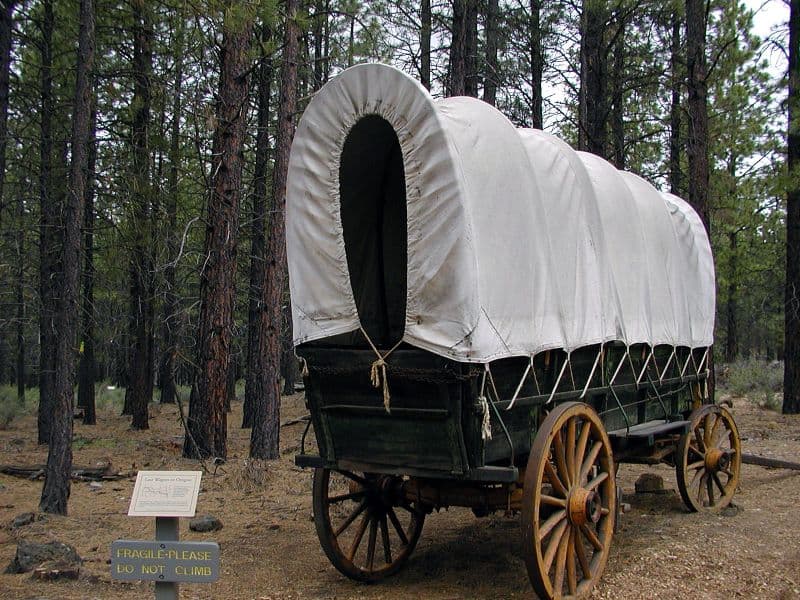
From the first wheel in Ur to the wheelchair-accessible wagon in Midway.
The Hicks line is, at the time of writing, fifty-five centuries and seven months old. It has crossed four continents, eleven languages, six major political collapses, two pandemics, the rise and fall of three empires, and the arrival of the automobile. It is currently embodied in one man, working in one workshop, in one county in eastern Texas, building the first wheelchair-accessible Conestoga wagon ever drawn. The Codex is in a fire-rated cabinet in the workshop's back room. The anvil — the same anvil last moved to Texas in 1942 from the original Wessex forge of approximately 870 AD — is in the workshop's front room, in use.
From the first wheel in Ur to the wheelchair-accessible wagon in Midway, the lineage is unbroken.
Talk to the wheelwright
Want to see the workshop or commission a wheel?
The Madison County workshop is open by appointment. Kelly would rather have the conversation in person than read a form. The Codex stays in the cabinet; the work is on the bench.