
Stage One
Wood selection & the frame.
Quartersawn white oak from a mill near Tyler. The wagon bed is laid out square, mortise-and-tenon joints cut by hand. Pegged, not bolted.
The Craft · Texas Wagon Making
Healin' Wheels is one of the last working wagon-making shops in America — and the only one in Texas building heritage wagons that are wheelchair-accessible from the frame up. Here's what the craft is, why it's nearly gone, and how a wagon is built in our barn outside Midway.
A wagon-maker — sometimes still called a wheelwright or wheel rite— is a craftsperson who can shape a wagon wheel from raw white oak, forge iron banding for the rim, build the bed and running gear, and stitch the leather. The trade combines three crafts in one shop: woodwright, blacksmith, and saddler.
For two centuries, every American family with land had access to a wagon-maker. By the early twentieth century, internal combustion did most of the trade in. Today fewer than a dozen working wagon-makers remain in the United States, and they are mostly in their seventies.
William “Kelly” Hicks is one of them. He has worked white oak with steam, forged iron banding on the anvil, and laid down true wagon-wheel rims for decades in East Texas.
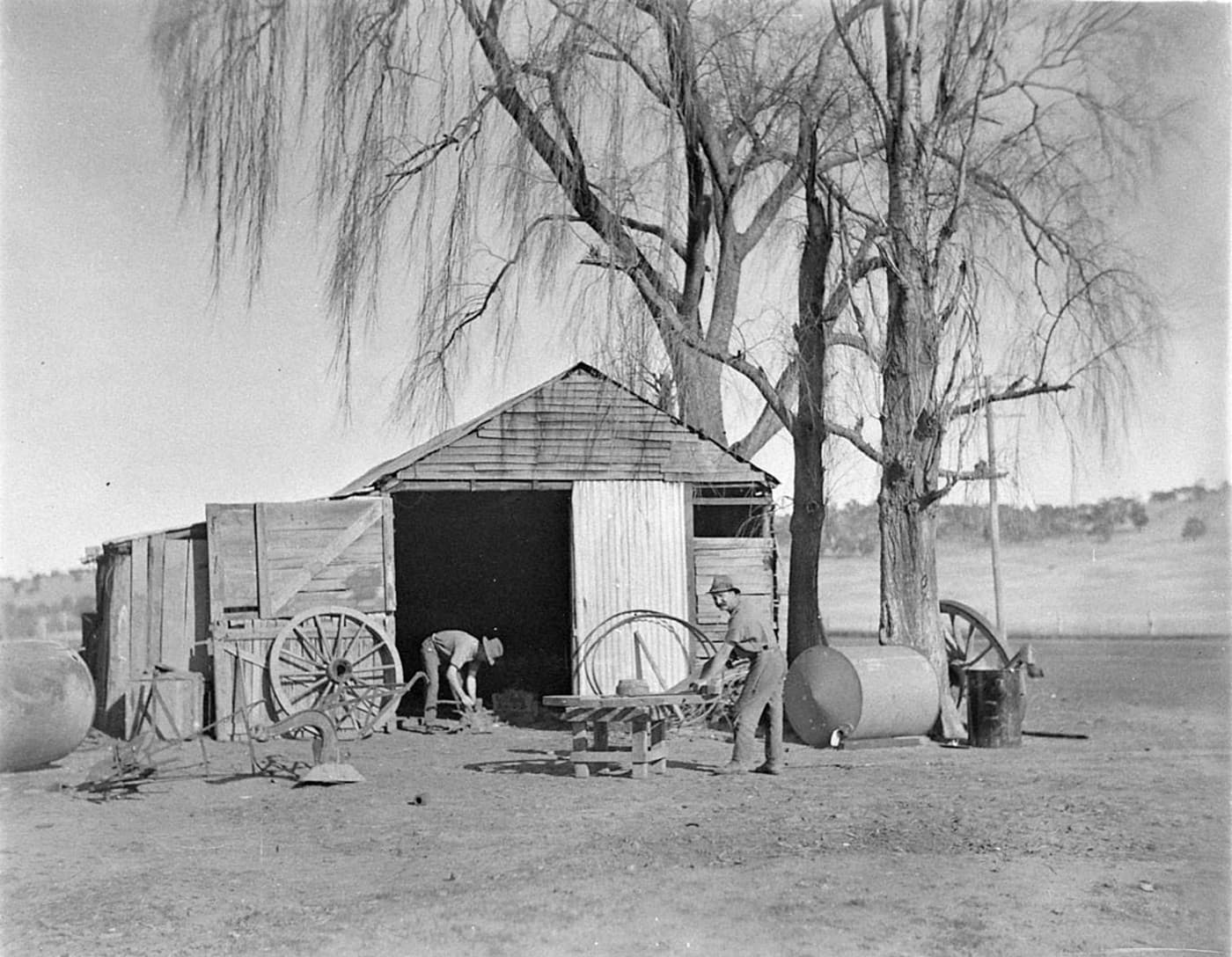 Wheelwrights at the wheel · archival photograph · Sam Hood
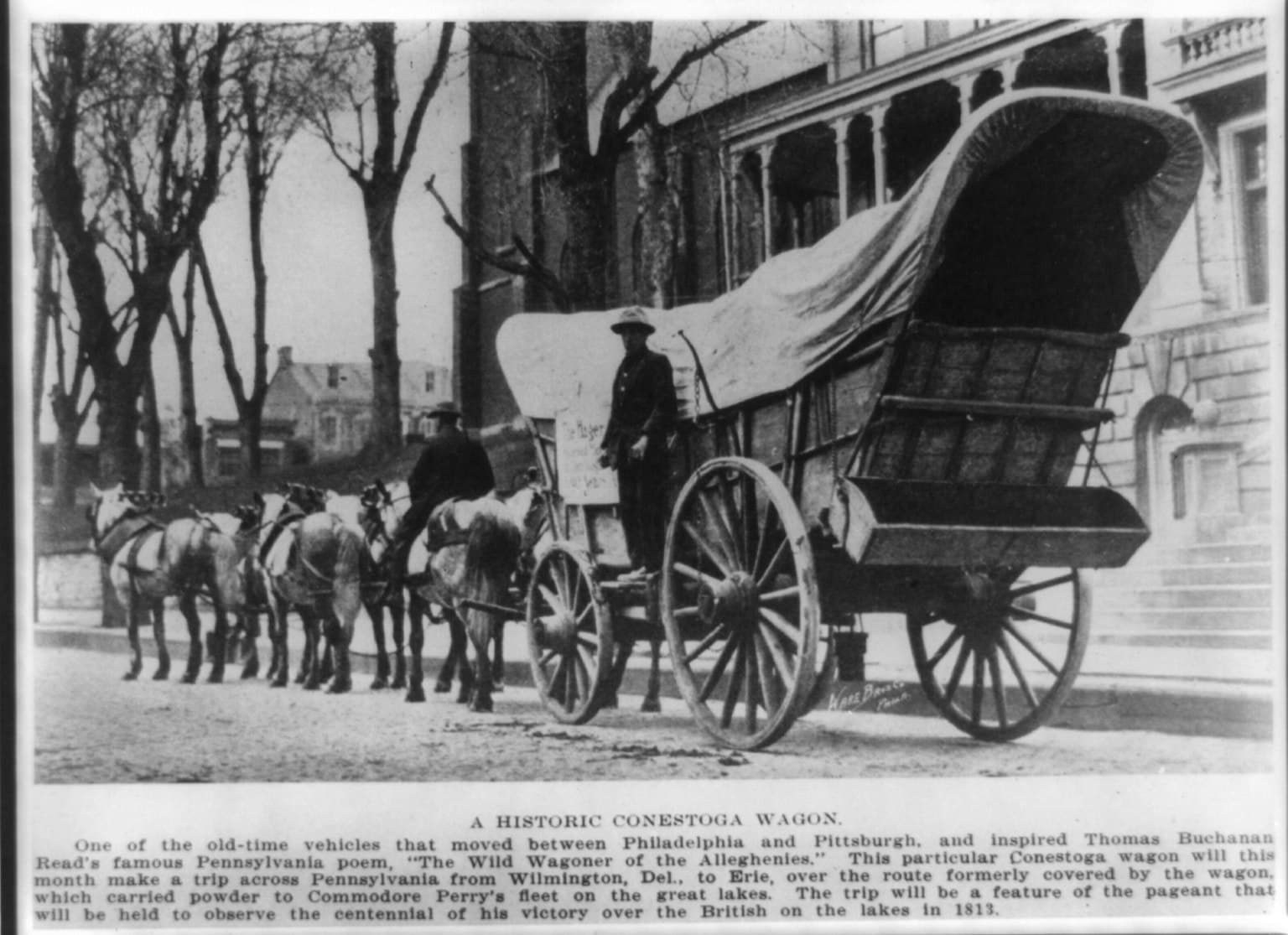 Historic Conestoga · Library of Congress · early 1900s
The wagons we build belong to a family of forms that rolled across this country for two hundred years — and across Texas in particular.
Conestoga wagonsare the heavy freight wagon that opened the American frontier — broad, boat-bottomed bed, canvas top hooped over white-oak ribs, iron-banded wheels. We build a Conestoga-style heritage wagon for parades, rodeos, and ranch events.
Prairie schoonersare the lighter cousin — the emigrant wagon, drawn by oxen or a single team, with a higher-set bed. Faster to build, easier to drive.
Custom heritage builds are the third leg of the shop. Ranches, museums, and event venues commission wagons for working use or display, often with a brand burned into the rear gate.
Every Healin' Wheels wagon takes about six months of master craftsmanship. Here's the sequence, in plain order.
Quartersawn white oak from a mill near Tyler. The wagon bed is laid out square, mortise-and-tenon joints cut by hand. Pegged, not bolted.
Hub turned on the lathe; spokes shaped and driven into the hub; the felloes (the wooden segments of the rim) glued and pinned. Dished slightly outward so the wheel carries load truer on a crowned road.
The iron banding is heated on the forge, stretched, and dropped onto the wooden wheel. Quenched in the slack tub, the iron shrinks tight against the felloes. That “ringing” is a wagon-maker's test for a good wheel.
Bench leather hand-cut and stitched. White-oak hoops bent for the canvas top. Axles, brakes, and the running gear assembled. The wagon is now a rolling object.
Two wheelchair tie-downs are integrated into the bed. The rear gate is rebuilt as a low-angle ramp in the same white oak. A low-step entry is cut into both sides for cane and walker users.
Oiled. Branded. Rolled out the shop doors at sunrise. The wagon does what wagons have always done — carry people who want to ride together.
Hire the Workshop
The workshop intends to take a small number of custom builds and partner events each year once the first wagons are complete. Nothing is currently for sale; this is a call for early conversations only. Every project starts with a phone call about what the wagon is for and who's going to ride in it.
Further Reading
Honest links to the public institutions that document American wagon making and the events our wagons serve.