The Long Life · Maintenance
A well-made wheel runs a generation. Cared for, it runs two.
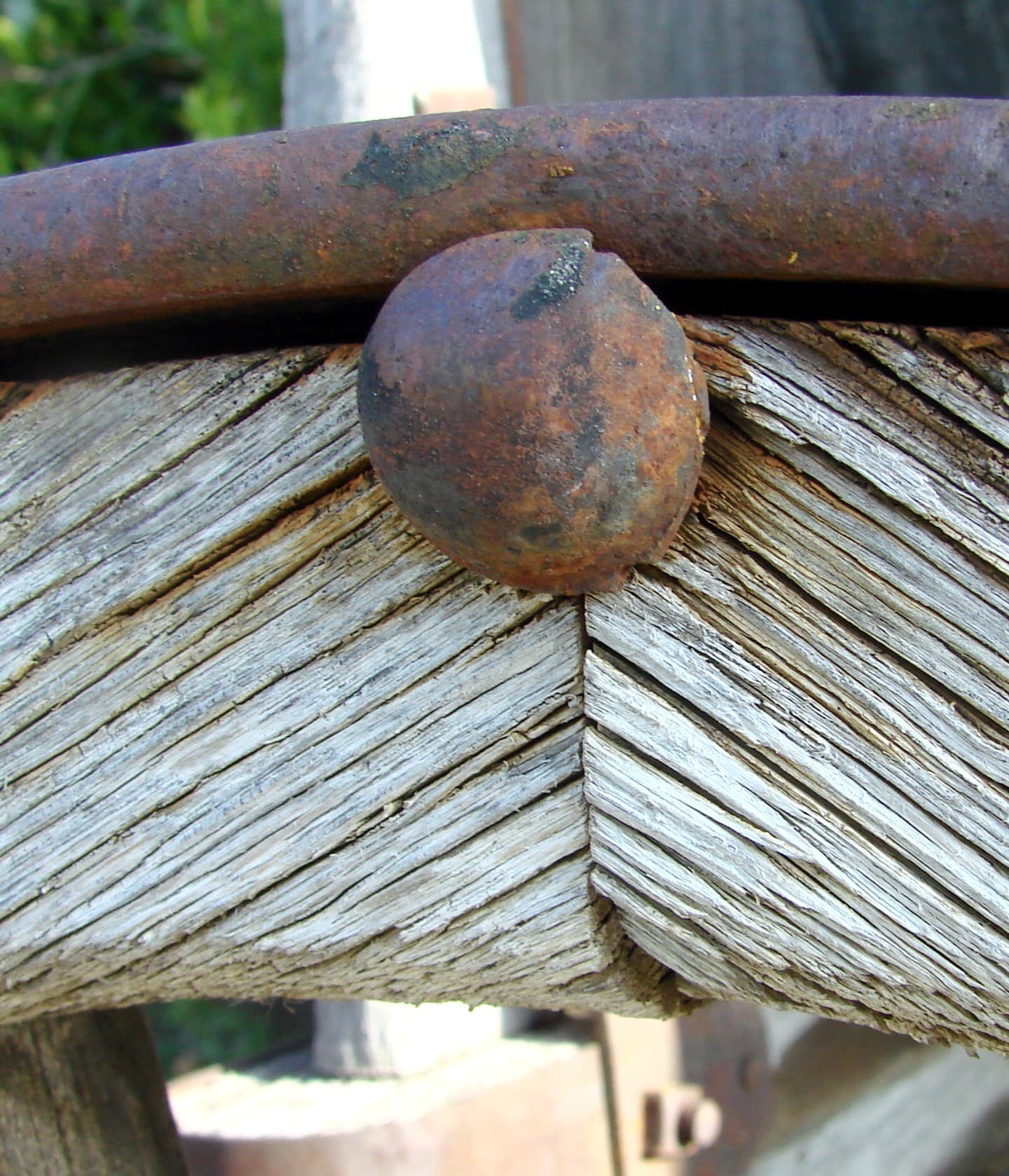
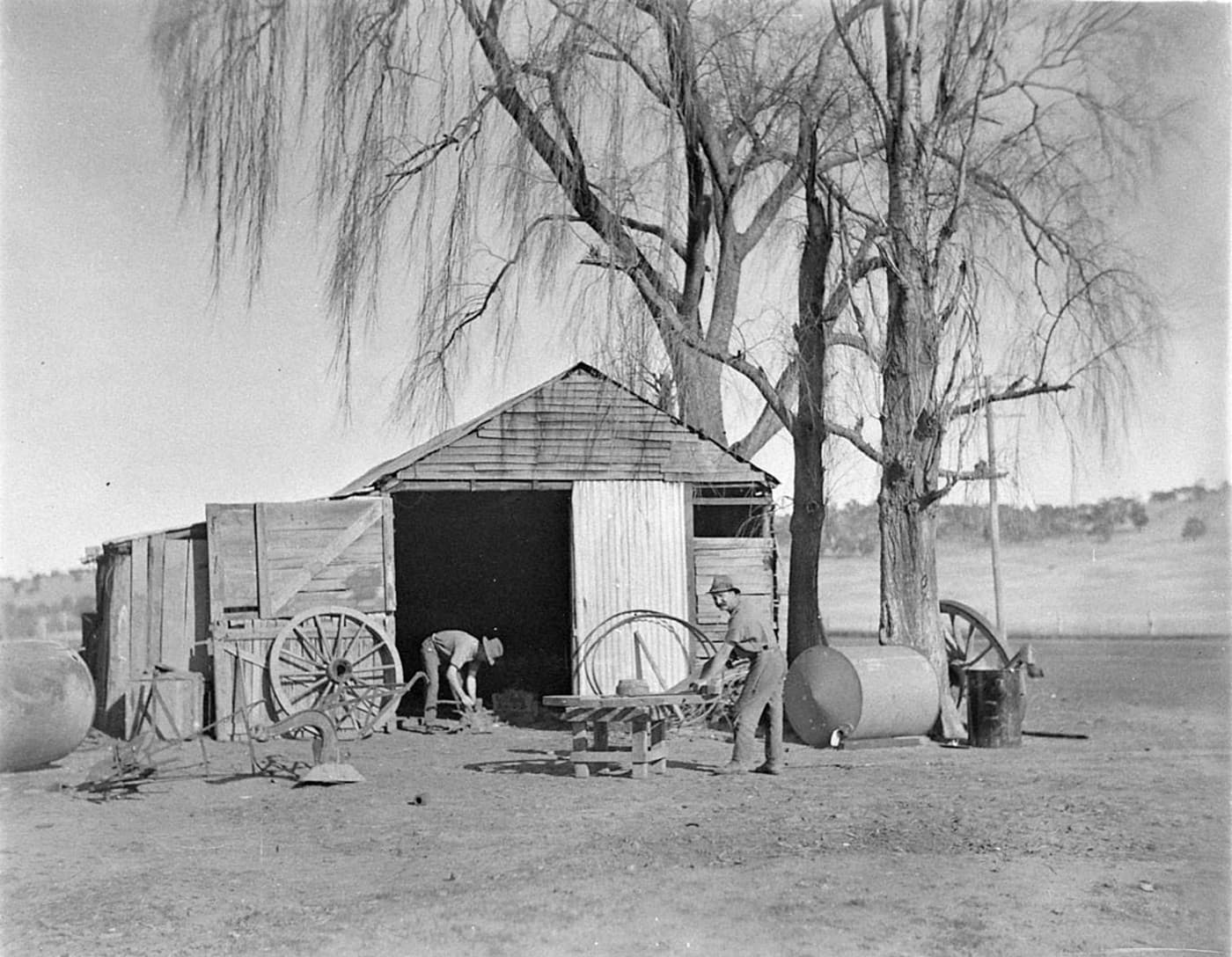
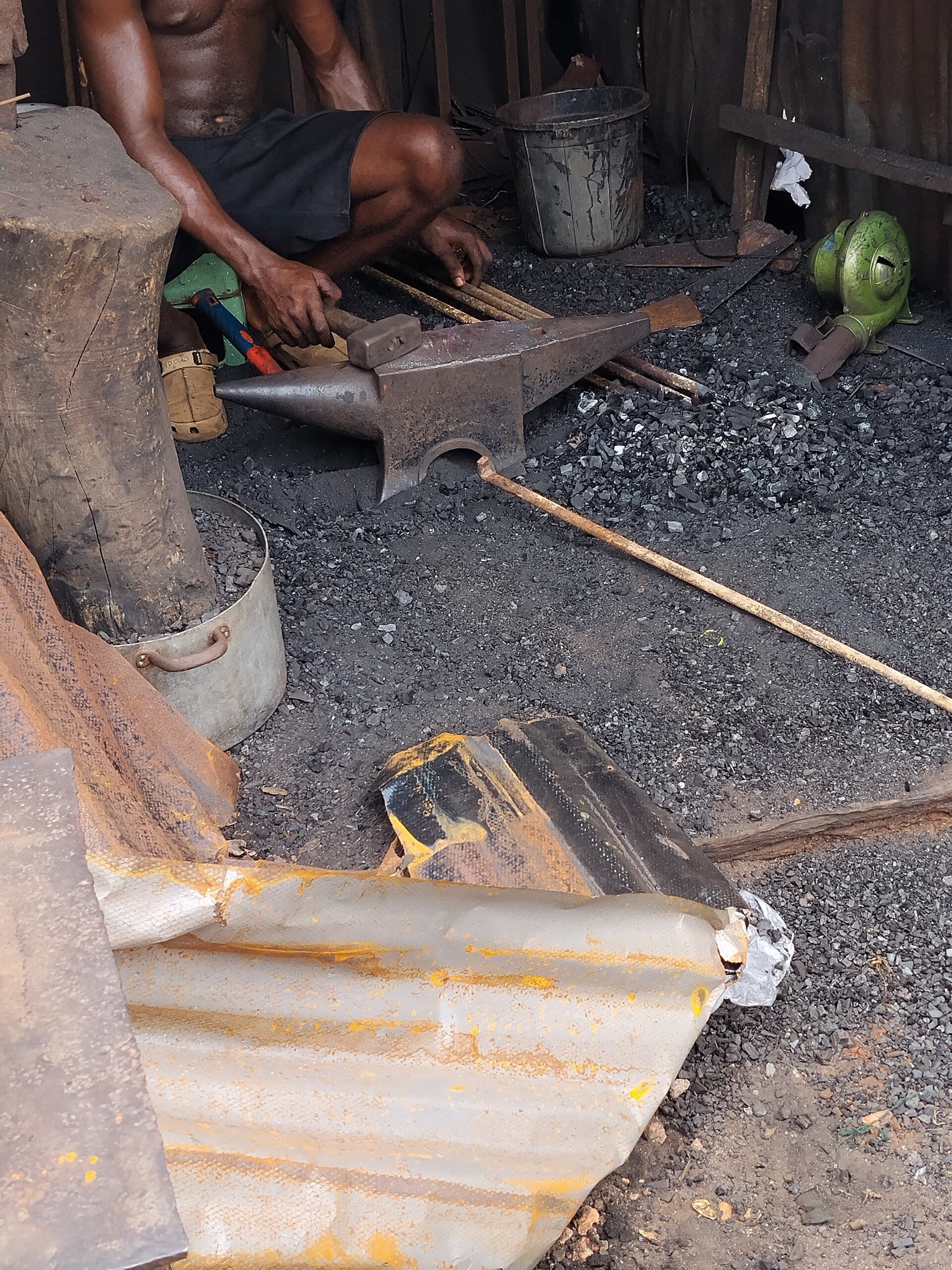
The first thing that wears on a working wagon wheel is the iron tire. A freight wagon hauling six thousand pounds across rocky Texas country grinds about a sixteenth of an inch off its outer rim every two or three thousand miles, depending on the road. When the iron is down to half its original thickness, or when it starts to develop hairline cracks at the forge-weld, the wheel goes back to a shop to be re-tired. Re-tiring is the same heat-shrink operation as the original fitting, only the wooden wheel is already broken in. The old tire is cut off with a chisel, a new strap is forged, traveler-measured, welded into a hoop, heated, and dropped on. A well-built wooden wheel will outlast three or four iron tires.
The other thing the trade watches for is the loose tire, and this is where climate matters more than most modern people realise. White oak shrinks across its grain by about 4 to 8% as it dries from green to bone-dry, and even a fully seasoned wheel keeps moving a fraction of a percent between humid summer and dry winter. In a dry Texas July, wooden felloes can lose enough diameter that a tire which was tight in May rattles by August. The fix is old, and you can still find it in barn yards: park the wagon in a shallow pond or creek for a night or two, let the wood swell back to its fitted size, pull it out, and roll on. If the tire never tightens up — if the wheel has dried past the point of useful swell — the only honest repair is to pull the tire, cut a quarter-inch out of it at the weld, reforge, and shrink-fit again to the new, smaller rim.
Hub grease is the second leg of maintenance. Historically the lubricant was a paste of linseed oil and graphite— the graphite was sold in the 19th century as black lead — sometimes thickened with tallow or beeswax for hot weather. The grease went between the cast-iron axle box and the iron axle skein, packed in fresh every few hundred miles. A wagon driver who could hear his own wheels was a driver who hadn't greased recently. By the late 1800s, petroleum axle grease in tin pails — the famous Mica Axle Grease made by Standard Oil, with flakes of muscovite mica suspended in the petroleum — had replaced linseed and graphite on most working farms. The mica did the same job the graphite had: a soft, plate-like solid lubricant that smeared into the bearing surface and stayed there.
Felloes are replaced one at a time. If a single rim segment cracks — a hard rock strike, a frost split, a hidden grain defect that finally let go — the wheelwright pulls the tire, knocks the cracked felloe loose at its dowel joints, shapes a new oak segment to exact match, dowels it in, and shrinks the tire back on. Two adjacent felloes is borderline. Three and the whole rim is suspect; at that point the trade wisdom is to rebuild the wheel from the hub out. Spokes are replaced even less often, because a spoke failure usually means the hub has gone too. An old wheelwright's saying: a felloe is a repair, a spoke is a rebuild, a hub is a new wheel.
The economics are why the craft survived as long as it did. A pair of working wheels in 1880 cost a farmer roughly two weeks' wages. A re-tire was an afternoon's work and a few dollars. A new felloe was less. As long as wheels could be maintained for a fraction of replacement cost, the wagon stayed on the road; the moment maintenance stopped being cheaper than buying a Ford, the wagon went into the barn. A wheel that gets re-tired every five thousand miles, greased every few hundred, and ponded once a summer will outlast its builder. There are working examples in living-history museums today that are more than 120 years old and still roll true.